DIRECTORS ARCHIVE
2025
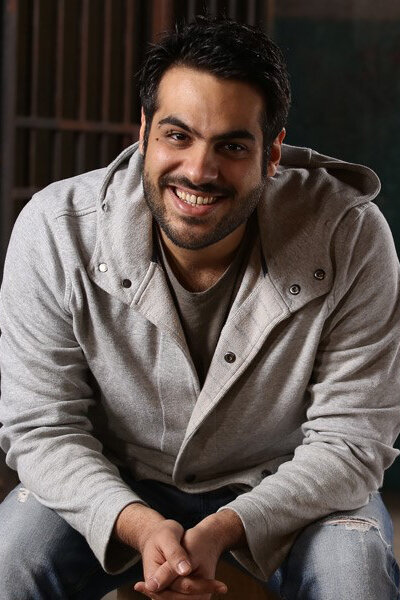
Ibrahim Snoopy is a Sudanese filmmaker and cinematographer who works for ARTE, BBC and The Washington Post, as well as directs music videos, commercials, and shorts. Notable works include the feature documentaries Khartoum Offside, which won Best Documentary at the Carthage Film Festival, and From Argentina to Sudan, as well as the award-winning shorts Serotonin and Journey to Kenya. This is his second feature.
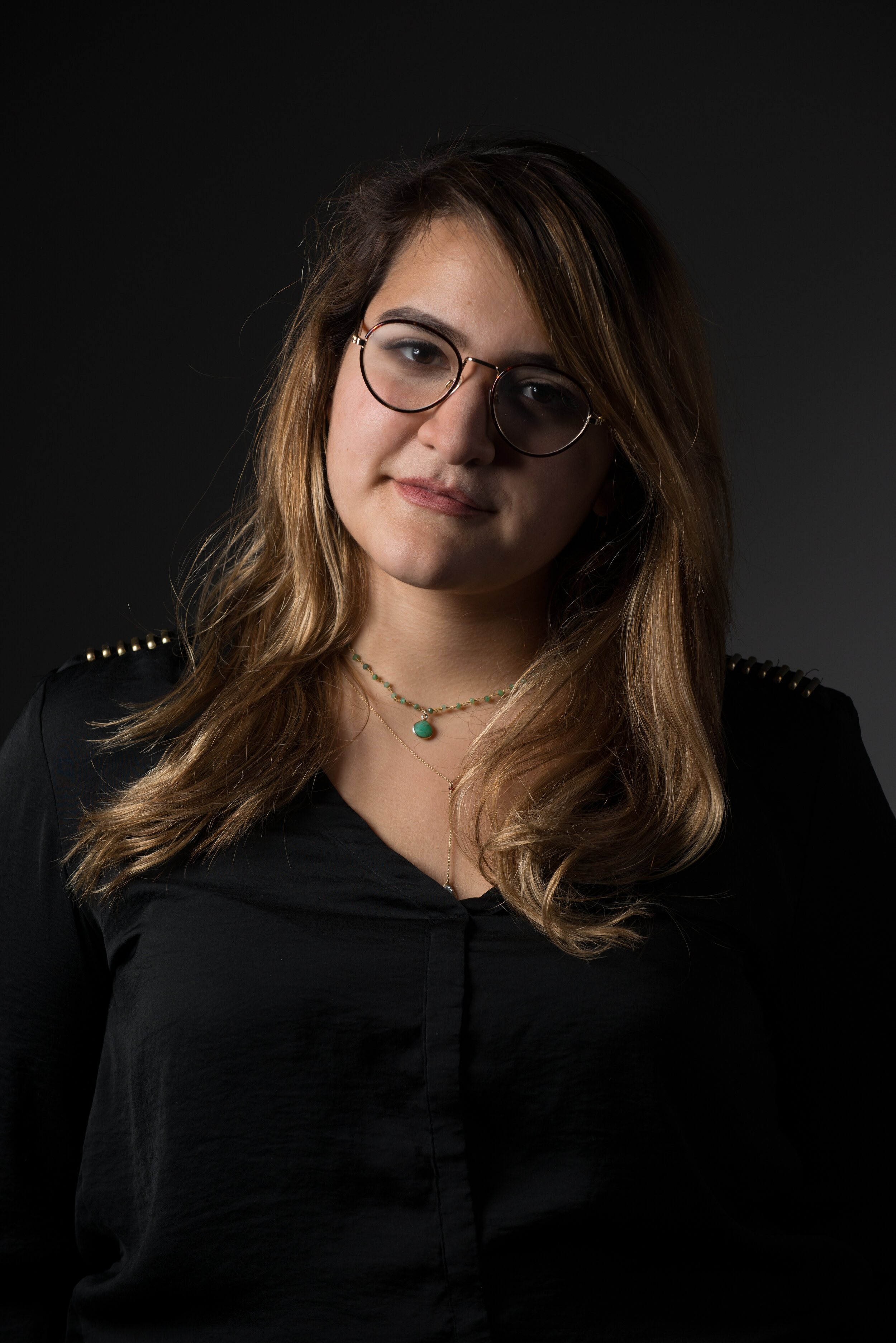
Rawia Alhag is a Sudanese filmmaker and screenwriter now based in Nairobi, Kenya. Her work focuses on women’s and children’s issues, shedding light on the experiences and struggles of Sudanese people both within their communities and in the diaspora. She directed the award-winning short film Out of Coverage, which won Best Foreign Film at the Juba Film Festival.
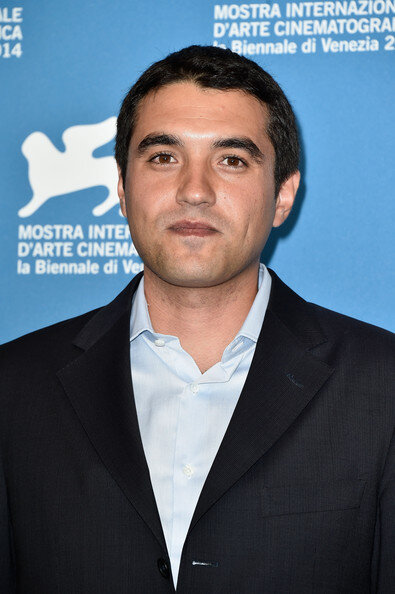
Anas Saeed a Sudanese filmmaker who started work as a video journalist for the independent media house Ayin Network. He has produced several reports for international media outlets that focus on human rights issues affecting different communities across Sudan. His work for Ayin Media has focused on covering culture and the recent war. His latest work is Five Meals of Resistance, soon to be released to festivals.
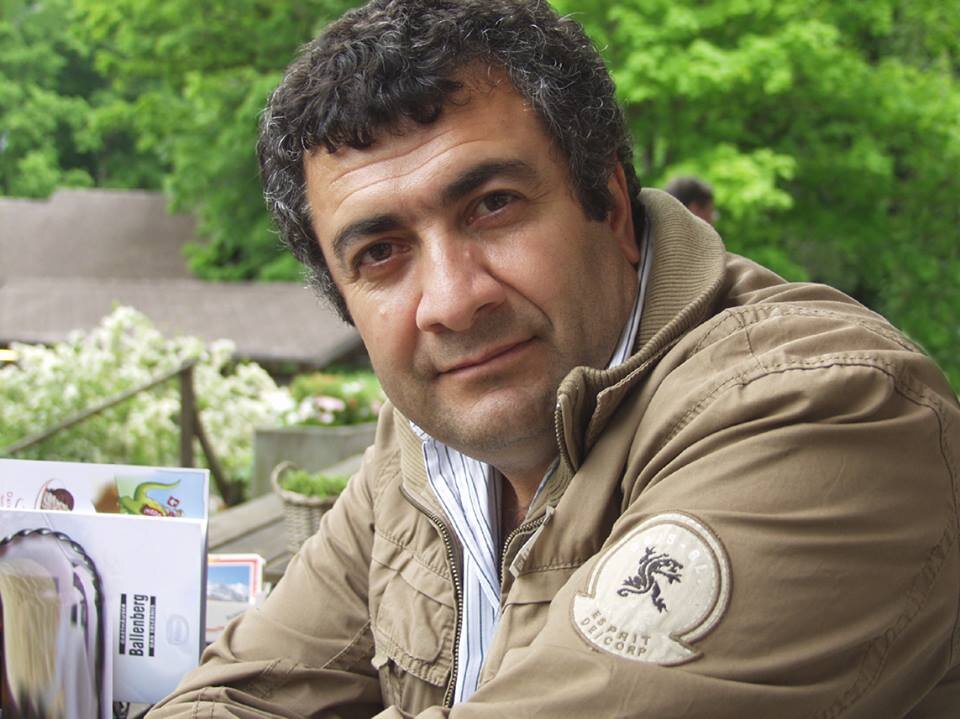
Timeea Mohamed Ahmed is a Sudanese director, editor & producer based in East-Africa. His work explores non-narrative experimental & documentary formats. He directed short films, including Saddari (2023) and Is it War? (2024). Other credits include Flower of Sinkat (2018) and Hope Journey (2021), as well as advocacy and commercial campaigns. His films center on the culture and struggles of Sudan.
Creative Director & Film Writer - Phil Cox – Native Voice Films
Since 1998, Phil has been the co-director of the award-winning indie film collective Native Voice Films. He has directed and shot over 30 films for TV and cinema. His recent cinematic features as director/writer are The Bengali Detective (Sundance and Berlin premiere – HBO), Love Hotel (Toronto premiere. Netflix / BBC Storyville), Betty They Say I am different (IDFA premiere, ARTE / BBC / Amazon), The Cleaner (FR2), and The Spider-man of Sudan (ARTE / GUARDIAN). He is the recipient of a British Grierson Award, a Rory Peck Award, and the Hinzpeter and Bayeux Calvados awards for his work in Sudan since 2004.
Aymen Khoja is an award-winning Saudi film producer and director with a master’s degree in film (with honors) from the New York Film Academy in Los Angeles.
With over a decade of experience, he has worked with major international studios, including MBC Studios—the Middle East’s largest broadcaster—and VIU, East Asia’s leading streaming platform. His projects have taken him around the world, from Los Angeles to Dubai, Abu Dhabi, Bucharest, Cairo, and Jeddah.
Aymen is the founder of AK Pictures, a production company dedicated to telling authentic local stories by bridging Saudi talent with top-tier Hollywood professionals.
Chakib Taleb-Bendiab is an Algerian screenwriter, filmmaker, and composer. He has worked on many feature films and is one of the screenwriters behind the British spy series GO DARK.
Chakib Taleb-Bendiab's filmography includes several compelling short films. Among them are the award-winning short flick BLACK SPIRIT, which circulated at several prestigious festivals across the globe and received the Programmers Delight Award at the 2018 Sapporo International Short Film Festival and Market in Japan, and SANG FROID, which won the Jury Award for Best Screenplay at the 2013 Sapporo International Short Film Festival and Market.
Laila Abbas is a Palestinian filmmaker, producer, and academic known for her sharp, socially engaged storytelling. She gained attention in 2013 with Ice & Dust, a documentary about a young Palestinian woman’s journey to Canada in search of a better life.
Her work explores gender and social norms within Palestinian society. In 2019, she was selected for Berlinale Talents at the Berlin Film Festival, and her debut feature, Thank You for Banking With Us!, marks her bold entry into fiction filmmaking.
Abbas began her career in television before earning a film degree from SAE Institute in Jordan and later studying cinema and TV production at Royal Holloway, University of London. She has also taught cinema at Palestinian universities and served as head programmer for Palestine Cinema Days.
Mahdi Fleifel is a Palestinian-Danish director who graduated from the National Film and Television School in the UK. In 2012, his first feature-length documentary A World Not Ours premiered at the Toronto International Film Festival and gathered around 30 awards (Berlinale, CPH:DOX, Yamagata, DOC:NYC). He took part in the Cinéfondation in 2013, and subsequently directed several short films: A Man Returned (Silver Bear 2016 EFA nomination), A Drowning Man (Cannes, Bafta nominated), I Signed The Petition (IDFA award and EFA nomination).
Film: TO A LAND UNKNOWN
Born in 1992 in Mogadishu, Somalia, Mo Harawe is a Somali-Austrian filmmaker who discovered his passion for cinema through art school in Somalia. In 2009, he relocated to Austria, where he pursued studies in visual communication and film at the Kunsthochschule Kassel. Harawe has directed several acclaimed short films, including Life on the Horn (2020) and Will My Parents Come to See Me (2022), both of which garnered international recognition. The Village Next to Paradise marks his feature-length debut and was notably the first Somali film to be featured in the Official Selection of the Cannes Film Festival. torinofilmlab.it
Mehdi M. Barsaoui is a Tunisian filmmaker born on May 23, 1984, in Tunis. He graduated in editing from the Higher Institute of Multimedia Arts of Tunis and furthered his studies in film directing at DAMS in Bologna, Italy. Barsaoui began his career directing short films such as Sideways (2010), Bobby (2014), and We Are Just Fine Like This (2016), which garnered international acclaim. His debut feature film, A Son (2019), premiered at the Venice Film Festival and won multiple awards, including the Best Actor award in the Orizzonti section. His second feature, Aïcha (2024), continues his exploration of personal and societal themes.
Sources: Wikipedia / Arabiske Filmdager / The New Arab
Born on May 6, 1984, in Saudi Arabia to Tunisian diplomatic parents, Nada Mezni Hafaiedh was exposed to diverse cultures from an early age. She pursued her passion for cinema at the Mel Hoppenheim School of Cinema in Montreal, Canada. Upon returning to Tunisia in 2009, she founded Leyth Production and directed her debut feature, Histoires Tunisiennes (2011), the first film released after the Tunisian revolution. Hafaiedh is known for tackling taboo subjects, focusing on themes of freedom and identity. Her 2017 documentary, Upon the Shadow, addressed the challenges of sexual freedom in a conservative society. With Take My Breath, she continues to shed light on marginalized narratives, particularly the intersex experience in Tunisia.
Scandar Copti is an Oscar-nominated Palestinian filmmaker, screenwriter, actor, and producer born in 1975 in Jaffa.Originally trained as a mechanical engineer at the Technion – Israel Institute of Technology, Copti transitioned into filmmaking, focusing on the social challenges faced by Palestinians in Israel. His debut feature, Ajami (2009), co-directed with Yaron Shani, won the Caméra d'Or Special Mention at the Cannes Film Festival and was nominated for Best Foreign Language Film at the 82nd Academy Awards.
Copti is known for his distinctive approach to working with non-professional actors, aiming to bring authenticity to his storytelling. He currently resides in Abu Dhabi, where he teaches film at New York University Abu Dhabi.
Sources: Wikipedia / NYU Abu Dhabi
Taghrid Abouelhassan is an Egyptian screenwriter, director, and producer. She graduated from the American University in Cairo and furthered her studies in filmmaking at institutions in the United Kingdom and the United States. Her short film Mercy Table, part of the anthology Chronicles of Her (2020), garnered 21 international awards and 14 nominations.Snow White marks her debut feature-length film, showcasing her commitment to stories centered on strong female leads and underrepresented communities.
In 2009, 18-year-old Waad al-Kateab moved to Aleppo to study marketing at the University of Aleppo.
In 2011, when protests against the Assad regime swept the country, Waad taught herself how to film and became a citizen journalist, determined to document the horrors of the war. During this time, Waad began reporting for Channel 4 News in the UK. Her reports on the conflict in Syria, and the most complex humanitarian crisis in the world, became the most watched pieces on the UK news program – and received almost half a billion views online and won 24 awards – including the 2016 International Emmy for breaking news coverage.
Waad documented her whole life over five years in Aleppo, as she fell in love with Hamza – a doctor – and gave birth to their first daughter, Sama ("Sky") in 2015. This footage became the basis of the feature documentary released in 2019, For Sama (ANA 2019). Directed together with Edward Watts, For Sama won the Prix L'Œil d'or for best documentary at the 2019 Cannes Film Festival, receiving a six-minute standing ovation.
Since fleeing Aleppo in December 2016, Waad, her husband, and their two daughters reside in London. In addition to her work as a journalist/filmmaker, Waad dedicates time to her advocacy campaign, Action For Sama.
2024
Born in 1985, Jordanian writer/director Amjad Al Rasheed received his MFA in Cinematic Arts with a concentration on Directing and Editing. He attended the Talent Campus during the 57th Berlinale, after which he directed short films that garnered nominations and won prizes at various Arab and international film festivals. In 2016 he was selected by "Screen International" as one of five "Arab Stars of Tomorrow".
On his film Inshallah a Boy, Al Rasheed said: “I was raised in a family full of women, and I’ve been listening to their stories since I was a little kid. Most of these stories do not reflect well on the male figures in their lives, if I’m being honest. And their stories stayed in my mind, as did the injustices they experienced. I felt I wanted to tell those stories because I felt so connected to them — I can’t tell a story if I don’t have a deep link to it —so there was no choice for me but to make this film” .
Cyril Aris is a Lebanese Director & Screenwriter and, since 2019, a member of the Academy of Motion Picture Arts and Sciences®. He received his MFA from Columbia University, then later returned there to teach.
His feature documentary, The Swing (2018), premiered in Karlovy Vary and won awards in El-Gouna, Rome, London, Budapest and Tunisia, with the Hollywood reporter calling it an ‘intimate and moving […] meditation on truth, love and lies in the face of illness and death’.
His latest feature documentary Dancing on the Edge of Volcano (2023), received a post-production grant from the Sundance Institute and the Robert Bösch FilmPrize. It premiered in the Main Competition of the 57th Karlovy Vary IFF where it won a Jury Special mention. It had its UK premiere in competition at the 67th BFI London Film Festival and its North American premiere in competition at DOC NYC, and played at CPH DOX in Denmark. It won the Audience Award at the 38th Mostra de Valencia in Spain, the Audience Award at the 64th Festival de Popoli in Italy, the Best Film award at the 29th Medfilm Festival in Rome, the Viewfinder Main Prize at the 20th Verzio Human Rights Festival in Budapest, and a jury special mention at the 45th Cinémed in France.
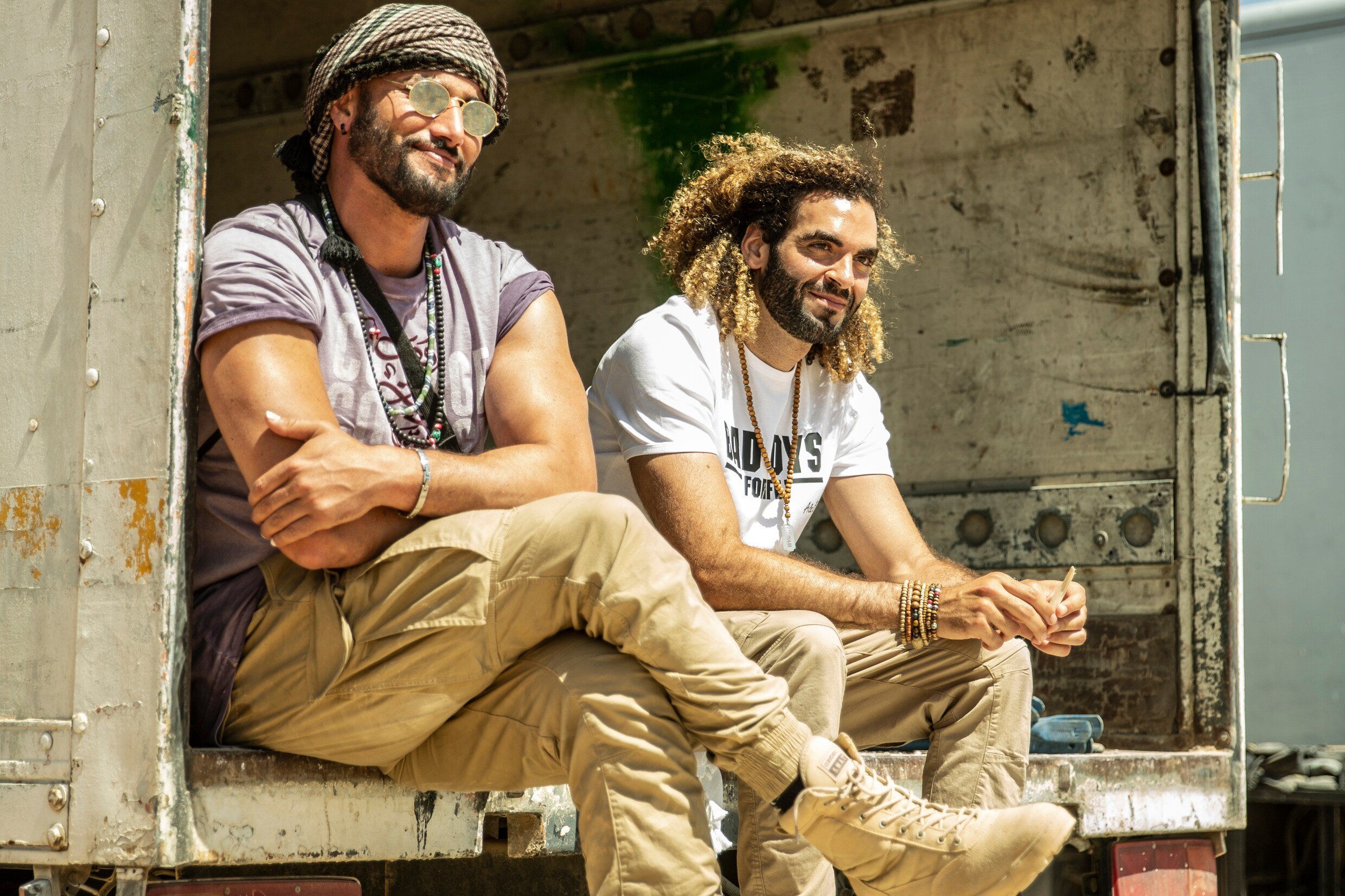
Adil El Arbi (1988) and Bilall Fallah (1986) are Belgian film and television directors of Moroccan descent. The duo, collectively billed as Adil & Bilall met at LUCA school of arts in Brussels. Broeders, their graduation short film, won the award for best Belgian student short film at the Ghent International Film Festival (2011). On set they are complementary, with Adil preferring to work on the script and Bilall on post-production. They now sign their films with their first names
They are known for writing and directing the feature films Image (2014), Black (2015), and Gangsta (2018), as well as directing both the 3rd and 4th films in the Bad Boys franchise: Bad Boys for Life (2020) and Bad Boys: Ride or Die (2024), starring Will Smith and Martin Lawrence.
Amr is an independent Yemeni film and theater director. In 2001, he received the president’s trophy in theater-script writing, becoming the youngest Yemeni to ever win the award. In 2005, Gamal established the Khaleej Aden Theatre Troupe, the first group to reactivate the theater scene since Yemen’s 1994 civil war. Between the years 2005-2014, Amr wrote and directed 10 theater productions. His play Ma’k Nazel became the first Yemeni production to be shown in Europe.
In 2018, production began on 10 Days Before the Wedding, his first feature. The film premiered in Aden, the first film to open commercially in Yemen in the last decade. it also became Yemen’s official submission to the Oscars.
His second film, The Burdened (2023), put Amr Gamal's name on the international cinema scene after becoming the first Yemeni film to ever be screened at the Berlin Film Festival. The film participated in a number of prestigious international film festivals and won many awards.
Omar Hilal is a multi-award-winning and seasoned commercial director with a background in writing. He wrote for Ad agencies for five years before embarking on a twenty-year career in directing adverts with intelligence, humor, grand cinematic execution and powerful characters.
Hilal has received the Grand Prix and Gold Awards from various awards shows, including the Cannes Lions, LIA, Dubai Lynx, Kinsale, Sharks, Creative Circle Asia, Euro Critals, and African Cristals.
Voy! Voy! Voy! (2023) is his first feature-length film.
Mohamed Kordofani is a Sudanese aircraft engineer turned filmmaker. He made a number of short films, including Nyerkuk, which won the Black Elephant Award for best Sudanese Film and the NAAS Award for best Arab film at Carthage Film Festival in 2017.
In 2023 Kordofani's debut feature film Goodbye Julia premiered in Cannes Film Festival, where it was awarded the Prix de la Liberté and also celebrated for being the first-ever Sudanese film to be officially featured in the festival.
He is also the co-founder of Klozium Studios; a production house based in Sudan & UAE.
Goodbye Julia was selected by the Sudanese National Committee operating in exile to compete for the Best International Feature Film at the 96th Academy Awards.
Carol Mansour, a Lebanese of Palestinian origin, is an independent documentary filmmaker. She was born in Montreal, Canada, and is currently living and working from Beirut, Lebanon. In 2000, she founded Forward Film Production.
With over 25 years of experience in documentary production, Mansour has achieved international recognition and honors for her films, with over fifty film festival screenings and official selections worldwide. In 2018 she received the Best Documentary Award at the Delhi International Film Festival and in 2017 the Audience Award for Best Feature Film at the Boston Palestine Film Festival for Stitching Palestine. In 2015 she was awarded Best Documentary at the Al-Ard Film Festival in Sardegna and the Women Film Critics Circle Award at the Rated SR Festival in New York for We Cannot Go There Now, My Dear.
Carol's work reflects her concern for human rights and social justice, covering a wide range of issues such as migrant workers, refugees, environmental problems, mental health, rights of the disabled, war and memory, right to health, and child labor.
Halkawt Mustafa (b. 1985) was born in Sulaymani, Kurdistan in northern Iraq. He moved to Norway with his family in 2000 and is a Norwegian citizen. His father’s political activism against Saddam and the old established Kurdish parties, necessitated their escape.
In 2000, they arrived in Norway as refugees, eventually settling and becoming Norwegian citizens.He got his education at NISS (Nordic Institute of Stage and Studio),
In 2011, he directed his first feature, the doomed love story Red Heart which went on to screen at many international festivals, and won several awards, and was part of ANA’s inaugural edition.
In 2015, Mustafa directed the acclaimed TV documentary The Women the Islamic State Fears, and in 2016, he directed his second feature El Clasico, which also screened at ANA. It’s the story about two Kurdish brothers who go on a dangerous quest through Iraq to Spain to meet Christiano Ronaldo.
Farah Nabulsi is a Palestinian British Oscar nominated and BAFTA award-winning filmmaker and human rights advocate.
She is the daughter of Palestinians who were fortunate enough to make a home in 1970's Britain — unlike the millions who continue to remain stateless in refugee camps. Born, raised and educated in London, Farah began her career as an institutional equity stockbroker. She ended up with a CFA designation at JP Morgan Chase before moving on to build a children-focused business that she ran for 10 years.
In 2015, she started working in the film industry.
She founded a production company, Native Liberty, through which she writes, produces and directs fiction films, exploring topics that matter to her and she created a digital resource to deconstruct the Israeli military occupation of Palestine in a way never done before.
Ibrahim Nash’at is an Egyptian documentary filmmaker . He holds a master’s degree in documentary filmmaking from the Met Film School.
His career in journalism spans various formats, working with several international channels and online platforms such as Deutsche Welle, Al Jazeera, and Business Insider, among others.
He co-edited the Academy Award nominated director Talal Derki’s Under the Sky of Damascus.
Hollywoodgate is his first feature film. It premiered at both the Venice and Telluride Film Festivals.
Filmmaker Q&A following screening
Lebanese filmmaker Feyrouz Serhal got her Masters degree in Film and Screen Studies at the Goldsmith College University in London. Prior to that she had worked as a director and creative producer at some of the most prominent Arab TV channels in the Middle East.
Feyrouz has written and directed several independent short video works. Her short narrative film Tshweesh won The Film Prize of Robert Bosch Stiftung at the Berlinale in 2016, and premiered at Locarno Film Festival in 2017. In 2023.
Since then, Feyrouz has finished two short fiction films: I Come From The Sea, which premiered at the Shanghai International Film Festival in 2023, and Sen Ti, and the feature documentary, The Third Rahbani.
She is now working on her first narrative feature film, ‘ Am Here But You Can’t See Me.
Egyptian-Austrian filmmaker, A.B. Shawky studied Political Science and Filmmaking in Cairo. After graduating, he enrolled at the NYU Tisch School of the Arts Grad Film Program.
His thesis film for NYU was his debut feature Yomeddine. The film premiered at Cannes Film Festival in 2018 and received the Francois Chalais Award, and was Egypt's official submission for the 91st Academy Awards. It was also ANA’s Opening Night film in 2019.
Shawky’s shorts The Colony, Things I Heard on Wednesdays and Martyr’s Friday have screened at festivals around the world.
His production company Desert Highway Pictures, which he founded in 2014, aims to bring stories of the underdog to the big screen.
Shawky was listed by Forbes Magazine among the top five Arab directors on the global stage.
Variety Magazine named him MENA Talent of the Year.
2023
Ahmed started out as a music student in Cairo in the 1990s. In 1999, he shifted gears and began taking jobs on films, first as an editor, eventually doubling as both a visual effects supervisor and credits designer.
His premier feature, Heliopolis (2009) was one of the first independent Egyptian films to be released theatrically in Egypt. He followed it by Microphone [ANA 2012] which was selected among the best 100 Arabic films in history by the Dubai International Film Festival.
He wrote and directed Rags & Tatters in 2013, Decor in 2014, and in 2018 he directed Exterior Night. [ANA 2019].
Ahmed Al-Daradji was born in Baghdad, Iraq in 1986. After graduating with a Bachelors in Audio & Visual Arts from the University of Baghdad, he worked as a director of photography, writer and director for Baghdad-based satellite stations and companies.
In 2004, he got a job as a sound recordist on the feature Ahlaam produced in the aftermath of the American invasion of Iraq. He then scripted, edited & did sound on the short film My Name is Mohammed and worked as a production assistant & sound recordist on the feature, Son of Babylon.
Eventually he moved to London where he got his MA in filmmaking at London Film School. Whilst in London he shot his third short Between the Two Banks. Before directing his first feature, Hanging Gardens, he participated in the Iraq 35mm short film workshop, writing and directing his latest short, Children of God.
Abdullah-Al-Arak is a Kuwaiti film producer and director.
His work includes multiple dramas and video clips. His debut feature, the Saudi wrestling comedy SATTAR, became the highest-grossing domestic title in the history of Saudi cinema, receiving high praise from both critics and audiences.
Born in Palestine in 1988, Ameen Nayfeh spent his formative years moving between both Jordan and Palestine.
Despite an early interest in filmmaking, he went to school to study nursing, and graduated from Al-Quds University in East Jerusalem in 2010. A couple of years later, following his passion of telling authentic stories from the region, he switched to film and got an MFA from the Red Sea Institute of Cinematic Arts in Jordan.
He has written, produced, and directed several award-winning shorts, and has been freelancing for film and TV production houses for the past 6 years. His acclaimed works include The Eid Gift (2012), Suspended Time (2014), and The Crossing (2017). His first feature, 200 Meters debuted at the Giornate degli Autori section of the 77th Venice International Film Festival in 2020.
Basil Khalil is an Academy Award & Palme d’Or nominated writer and director of Palestinian-British-Irish heritage. His Oscar nominated short film AVE MARIA (2015) premiered in official competition at the Cannes Film Festival before going on to screen at over 300 festivals and winning more than 35 awards. It was described by the New York Times as; “The Middle Eastern answer to ‘Curb Your Enthusiasm’.” His debut feature film, A GAZA WEEKEND (2022) premiered at the Toronto International Film Festival where it won the FIPRESCI prize.
After graduating from the School of Cinematic Arts at The University of Southern California, Bassel wrote and produced the OSCAR nominated and BAFTA winning film Theeb [ANA 2015] .
His directorial debut, The Alleys, premiered at the Piazza Grande of the Locarno Film Festival before going on to play at the BFI London and Rotterdam Film Festivals.
Bassel also directed six-part sports docuseries Chasing Dreams, which is due out in 2023.
Before the above-the-line work Bassel got his first taste of feature film sets as a crew member on The Hurt Locker, Sundance winner Captain Abu Raed, and Disney Arabia's The United. He resides in London.
Salah Issaad is an Algerian director who was raised in a family of publishers. After receiving a Bachelor's degree in Letters and Foreign languages in 2008, he joined the Law school of Batna in Algeria.
He moved to France to complete his film studies at the University of Paris VIII. Eventually, he joined the ARFIS audiovisual school in Lyon, then the Factory School in Villeurbanne, where he obtained his Cinema director diploma.
Passion motivates his work. He likes to tell stories that appreciate human relationships. Moreover, he likes to explore different narrative forms and film genres like drama, tragedy, stories inspired by real events, as well as comedies.
His debut feature Soula was co-written by Soula Bahri, the inspiration for the film.
Maha HAJ is a Palestinian filmmaker and screenwriter.
She started life as a teacher before moving into film as a set designer and art director on titles such as The Time That Remains (2009) [ANA2012].
Haj wrote and directed the short film Oranges (2009) and the documentary Behind These Walls (2010).
Her first feature Personal Affairs (2016) was nominated for Cannes Film Festival’s Un Certain Regard official selection and won numerous awards, including Haifa Film Festival’s Best Feature and a Special Mention for International Feature Film at Zurich Film Festival.
Her 2nd feature Mediterranean Fever, also debuted in the Un Certain Regard section of the 75th annual Cannes Film Festival in 2022, where it won the best screenplay award.
Born in Tangier in 1980, Maryam Touzani spent her childhood in her hometown before pursuing university studies in journalism in London. Passionate about writing, she returned to Morocco and worked as a journalist, specializing in Maghreb cinema. Soon she transitioned from journalism to film.
In 2008, she wrote and directed a documentary for the first National Women's Day in Morocco. It was followed by When They Slept (2012), a fiction short, that traveled the festival circuit and collected 17 awards. Her second short, Aya Goes to the Beach (2015) won 15 awards.
In 2014 she started collaborating closely with the director Nabil Ayouch on the script of his highly-acclaimed feature, Much Loved (2015). That collaboration continued on Razzia (2017) which she co-wrote with Nabil and also acted in. Razzia was selected to represent Morocco at the Oscars.
Adam [ANA 2022], her first feature which she both wrote and directed, premiered at the Cannes Film Festival’s Un Certain Regard. The film went on to play at the Toronto International Film Festival, The Karlovy Vary International Film Festival, Rotterdam International Film Festival, Palm Springs International Film Festival, Chicago International Film Festival, American Institute Film Fest and has won 23 awards to date. It was also sold in over 20 countries.
The Blue Caftan was awarded the Un Certain Regard FIPRESCI Prize at the 2022 Cannes Film Festival and was Morocco's entry for the 95th Academy Awards for Best International Feature Film.
Swedish-Egyptian director Tarik Saleh was born in Stockholm in 1972 to a Swedish mother and an Egyptian father.
His varied career saw him as an animator, a publisher, a journalist and a film director. In 1990, he was one of Sweden's most prominent graffiti artists, co-creating Fascinate.
He and his producer, Kristina Åberg, are two of the founders of the production company Atmo.
Saleh directed and co-wrote Metropia (2009 Venice International Film Festival), featuring Vincent Gallo, Juliette Lewis, and Stellan Skarsgård, He co- directed the award-winning documentary, Gitmo, and the thriller, Tommy (2014).
He also produced the music video I Follow Rivers for Lykke Li, which has garnered nearly 60 million YouTube views.
His Movie The Nile Hilton Incident [ANA2017] won the Grand Jury Prize for Dramatic Film in the World Cinema Section at Sundance 2017, and won five awards, including Best Film at the 53rd Guldbagge Awards.
His 2nd feature, Boy from Heaven /CAIRO CONSPIRACY, was selected to compete for the Palme d'Or at the 2022 Cannes Film Festival.
Born in Lebanon in 1973, Wissam is a Lebanese/French director and journalist based in Paris. After 3 years working with a pirate radio in Beirut, in the midst of the Lebanese war, he turned legit and took jobs as a video editor with several Lebanese television networks.
In 1998, he moved to Paris where he worked with the French/German network ARTE, as a news cameraman, editor and journalist covering conflicts in Lebanon, Darfour, Afghanistan, and North Korea. On the lighter, more creative side, he worked as an assistant director on music videos for artists such as Sinead O’Connor, Asian Dub Foundation and Noir Desir, as well as on feature films and documentaries.
In 2004, he directed his first short, Hizz Ya Wizz, about the boredom of a young man in a modern city. In 2006, while covering the Israeli agression on Lebanon, he filmed his second short, A Hero Never Dies, about the endless waiting of a young artist during wartime. This was followed in 2007 by An Army of Ants about three young men on their quest for a Kalashnikov. The film competed at the Locarno Film Festival and won the Jury prize at the Lunel Film Festival in France.
In 2012, he directed his first documentary IT’S ALL LEBANON [ANA 2012] awarded the Bronze Tanit for the Best Documentary at Carthage Film Festival.
His first feature HEAVEN SENT (2016), selected by ACID in Cannes, won the Grand Prize at Tübingen Film festival among many other awards.
His film UNFORGETTABLE MEMORY OF A FRIEND (2018) won the Jury Award at the Hiroshima International Film festival.
His latest feature DIRTY, DIFFICULT, DANGEROUS (2022), played at the 79th Venice International Film Festival and at the Red Sea FIlm Festival, among others.
Yasmine Benkiran grew up on the Moroccan Atlantic coast and came to Paris when she was 18. In France she studied Philosophy and Communication Sciences. She eventually switched majors, entering French National Film School La Fémis in the Screenwriting workshop (l’Atelier Scénario).
As a screenwriter, she writes for both television and cinema. She also wrote two books about Morocco and a historical series of podcasts about Alice Guy, the world’s first female director.
In 2018, Yasmine directed her first short film, Winter Time (Tangier IFF, Off-courts Trouville). She is currently developing Black Library, an anthology television series of mixed genre (fantasy, psychological thriller, science-fiction) as well as On the Nile, an animated spy movie.
Queens is her first feature.
2022
Born in Tangier in 1980, Maryam Touzani spent her childhood in her hometown before pursuing university studies in journalism in London. Passionate about writing, she returned to Morocco and worked as a journalist, specializing in Maghreb cinema. Soon she transitioned from journalism to film.
In 2008, she wrote and directed a documentary for the first National Women's Day in Morocco. It was followed by When They Slept (2012), a fiction short, that traveled the festival circuit and collected 17 awards. Her second short, Aya Goes to the Beach (2015) won 15 awards.
In 2014 she started collaborating closely with the director Nabil Ayouch on the script of his highly-acclaimed feature, Much Loved (2015). That collaboration continued on Razzia (2017) which she co-wrote with Nabil and also acted in. Razzia was selected to represent Morocco at the Oscars.
Adam, her first feature which she both wrote and directed, premiered at the Cannes Film Festival’s Un Certain Regard. The film went on to play at the Toronto International Film Festival, The Karlovy Vary International Film Festival, Rotterdam International Film Festival, Palm Springs International Film Festival, Chicago International Film Festival, American Institute Film Fest and has won 23 awards to date. It was also sold in over 20 countries.
In 2019 Maryam was invited to become a voting member of the Academy Awards.
Mounia Meddour was born in Moscow in 1978 to a Russian mother and an Algerian father. They eventually moved back to Algeria, where she was raised. Her father is the renowned Algerian director, Azzedine Meddour.
At 18, she moved to France with her family, as a result of death threats they received during the Algerian Civil War.She studied journalism before joining the summer directing program at FEMIS in Paris.
Her first short film, Edwige (2011) won the Ciné+ Award at the Saint-Jean-de- Luz Festival, the UniFrance Short Film Award and was featured in several festivals including Dubai International Film Festival.
Papicha, her first feature, was selected for the Un Certain Regard at the Cannes Film Festival in 2019. In February 2020, ait won two César Film Awards - one for Best First Feature Film and another for Most Promising Actress in a Leading role.
Born 1972 in Nabeul, Anis Lassoued obtained his cinematic diploma from Maghreb Institute of Cinema with a graduation project called The Puzzle (1998). After studies at FEMIS in Paris, he directed the short documentary The Pendulum that was followed by the documentary The Sugar Dolls of Nabeul and the short narrative Magic Harvest. His second short narrative My Shoes was screened at LAFF 2012.
A second Life is his first feature.
For over 20 years, Joana Hadjithomas and Khalil Joreige have collaborated as filmmakers and artists, producing cinematic and visual artworks that intertwine. They've focused on the images, representations and history of their home country, Lebanon, and questioned the fabrication of imaginaries in the region and beyond.
Together, they have directed documentaries such as Khiam 2000-2007 (2008), El Film el Mafkoud (2003) and feature films such as Al Bayt el Zaher (1999) and A Perfect Day (2005). Their feature, Je Veux Voir, starring Catherine Deneuve and Rabih Mroue, premiered at the Cannes Film Festival in 2008. The French Critics Guild chose it as the Best Film Singulier. Their documentary, The Lebanese Rocket Society [ANA 2014], premiered at the Toronto International FIlm Festival. All their works have been released worldwide and collected many international awards.
Their artwork too, has been exhibited in prominent museums, biennales and art centers worldwide. In 2017, they were awarded the prestigious Marcel Duchamp Prize.
Hadjithomas and Joreige are the co-founders of Abbout Productions and serve as executive board members of the Metropolis Cinema in Beirut. They divide their time between Beirut and Paris.
Shady Hanna is a Lebanese director who rose to prominence in the early 1990s with the release of a locally-produced comedy show called S.L.CHI. Lebanon’s civil war had just ended and the country was in dire need of comic relief. Hanna co-created, wrote and directed S.L.CHI, hiring non-actors. It became a commercial hit, running for nine consecutive seasons on Lebanon’s MTV.
In 2000, he directed the film version of the series, S.L.Film. That too became a success and a cult classic.
Staying in the realm of comedy and continuing to rely on fresh talent, Hanna recreated his success by developing LOL, a late-night comedy show for OTV. That, too, become a smashing success.
Juggling between TV & feature films, Hanna directed the Lebanese romcom movie Yalla Aa’belkon Chabeb (2016).
In addition to comedy shows and films, Hanna writes and directs music videos and TV commercials.
Award-winning writer and director, Mohamed Diab was born in Mecca, Saudi Arabia in 1977. He then migrated to Egypt where he studied commerce at Suez Canal University in Ismailia before pursuing a degree in film at the New York Film Academy.
His work is often centered on pressing Egyptian issues. Cairo 678 [ANA 2012] , his directorial debut was released a month before the Egyptian revolution and was deemed by the New York Times, "unmistakably a harbinger of that revolution." Paulo Coehlo tweeted it "should be mandatory for all men to watch."
Before Cairo 678, he wrote four films: Real Dreams, The Island, The Replacement, and Congratulations. All which enjoyed commercial success in Egypt.
It took him and his brother two years and 13 rewrites before he considered Clash [ANA 2017] ready. The film opened Cannes' "Un Certain Regard" in 2016 and got the attention of Tom Hanks who sent Diab a letter to praise him for delivering a non-stereotypical and "enlightening depiction of modern Egypt".
His film Amira (2021) picked up three awards at the Venice Film Festival.
Mohamed often collaborates with his writer-producer partner and wife, Sarah Goher.
These days, Mohamed splits his time between Egypt and LA. His latest project is as the lead director on Marvel Studio's Moon Knight starring Oscar Isaac and Ethan Hawke.
Robert Cremona was born and raised in Lebanon. He graduated in 2008 with top honors and an award-winning short film ‘Le Temps des Cerises’ from IESAV- USJ, one of the leading film schools in the Middle East.
In 2011, he released his second short film ‘#signhereplease’ online. The film is a commentary on the impact of technology on our day-to-day social connections. It was shot in NYC using an iPhone.
His directing work also consists of commercials, documentaries and TV series.
TV Society (2020) is his first feature.
Director and screenwriter Kaouther Ben Hania, was born in Sidi Bouzid, Tunisia. She studied commerce in college, then entered the École des Arts et du Cinéma de Tunis (EDAC).
She produced the shorts La Breche (2004) and Me, My Sister and The Thing (2006) before joining the founding team of Al-Jazeera documentaries before moving to Paris in 2008 to pursue a Master’s degree at the Sorbonne.
Imams go to School, her first documentary premiered at IDFA 2010. She also directed several shorts, including Wooden Hand, (2013) and Sheikh's Watermelons (2018) which had a long and successful run on the international festival circuit.
Her first feature, Challat of Tunis (2013) opened ACID in Cannes in 2014 and won the Syndicat Français de la Critique de Cinéma prize at the Amiens Festival. Her feature Zainab Hates the Snow premiered at Locarno in 2016.
Beauty and the Dogs [ANA in 2018], premiered at Cannes Film Festival’s Un Certain Regard in 2017, won the Best Sound Creation Award and was distributed in many countries.
Her latest film, The Man Who Sold His Skin, premiered at the Venice Film Festival 2020, won the award for best actor and was nominated in the Best Foreign Language Film category at the 93rd Academy Awards.
Kaouther currently resides in Paris.
Born in 1981, writer/director Khadar Ayderus Ahmed is a Finnish filmmaker of Somali descent.
He started his film career as a scriptwriter, co-wroting Citizens (2008) with Juho Kuosmanen. The film received the 2nd prize, Leopard of Tomorrow, at the Locarno Film Festival and Prix Arte at the Premiers Plans Film Festival in Angers.
He also co-wrote Unexpected Journey with director Samuli Valkama, which premiered theatrically across Finland in 2017.
Khader then directed several shorts, including The Night Thief (2017) that made the international film festival rounds.
The Gravedigger's Wife is Ahmed’s first directorial feature. It has won numerous awards including The Golden Stallion of Yennenga at FESPACO 2021, the FIPRESCI Prize for Long Narrative Competition at Luxor African Film Festival 2022, the Amplify Voices Award at the Toronto International Film Festival 2021 and was selected for the Cannes Film Festival 2021 (Critics' Week section).
Saudi filmmaker Abed Al-Aziz Alshlahei was born in Riyadh in 1986. His passion for movies and filmmaking started early. He directed four short films before directing his first feature.
The open ended theme of his movies comes from the instinctual and magical realism of the environment he grew up in. His movie Kaman (2016), for instance, depicts the conflict of ideas between a religious person and a violin that fights for its rights in a clash between reality and fantasy.
It was followed by Distance Zero (2020) which won Best Film at the Saudi Film Festival, and Best Cinematic Achievement from the Alexandria Film Festival.
Tambour of Retribution (2020), his second feature, was Saudi’s submission to the Academy Awards. He is now preparing for his third, Hobal.
Jordanian director and screenwriter, Zaid Abu Hamdan, holds a Masters degree from the New York Film Academy in Hollywood, California.
He began his career as a producer and assistant director on international television programs. His gigs included reporting and producing entertainment news for MBC Group from Hollywood, as well as developing content for E! Entertainment during the Awards season.
While working as a director and content creator of reality shows, Zaid wrote and directed five short films. Daughters of Abdul-Rahman is his first feature.
Born in Nazareth in 1961, Hany moved with his family to the Netherlands as a young man. There he studied and worked as an engineer for two years before getting a job as a producer of documentaries and shorts with Dutch TV.
In 2002, his 2nd feature Rana’s Wedding, about a girl from Jerusalem, who had until 4pm to get married or leave with her father to Cairo, gained Hany accolades on the festival circuit. But, it wasn’t until Paradise Now (2005) about two childhood friends who volunteer to become suicide bombers, that the world took notice. The film was nominated for an Academy Award for Best Foreign Film, and won the Best Foreign Language Film award at the 63rd Golden Globes. The first time a Palestinian film was nominated for such an award
His 3rd feature Omar, (ANA2014), about a young Palestinian freedom fighter who becomes an informant after he's tricked into an admission of guilt by association in the wake of an Israeli soldier's killing, was also nominated for an Academy Award for Best Foreign Film.
The Idol (2015), in which he has a cameo, is based on the real-life story of Mohammad Assaf, the Palestinian singer and winner of the 2nd season of “Arab Idol”.
He is the director of Huda’s Salon (2021) and the Producer of Amira (2021).
2021
Swedish-Egyptian director Tarik Saleh was born in Stockholm in 1972.
His varied career saw him as an animator, a publisher, a journalist and a film director. In 1990, he was one of Sweden's most prominent graffiti artists.
He and his producer, Kristina Åberg, are two of the founders of the production company Atmo.
Saleh directed and co-wrote Metropia (2009 Venice International Film Festival), featuring Vincent Gallo, Juliette Lewis, and Stellan Skarsgård, He co- directed the award-winning documentary, Gitmo, and the thriller, Tommy (2014).
He also produced the music video I Follow Rivers for Lykke Li, which has garnered nearly 60 million YouTube views.
His Movie The Nile Hilton Incident won the Grand Jury Prize for a Dramatic Film in the World Cinema Section at Sundance 2017
Carol Mansour is an independent documentary film maker. She founded Forward Film Production in 2000 in Beirut, Lebanon.
With over 25 years in documentary production, Mansour achievedvinternational recognition and honor for her films, with over fifty film festival screenings and official selections worldwide.
Her films have been screened at several festivals in Europe and North America, winning numerous prestigious awards including most recently, the Best Documentary Award at the Delhi International Film Festival in 2018 and the Audience Award for Best Feature Film at the Boston Palestine Film Festival, 2017, for her 2017 film “Stitching Palestine”.
She was awarded the Best Documentary Award at the Al-Ard Film Festival in Sardegna, and the Women Film Critics Circle Award at Rated SR Festival 2015 in New York, for her 2014 documentary film “We cannot go there now, my Dear”.
She was awarded Best Documentary at the Rated SR Festival 2014 in New York, and the Jury’s Special Mention at the FIFOG festival in Geneva for her 2013 film “Not Who We Are”.
Her 2006 film “A Summer Not To Forget” received Best Short International Documentary at the New
Zealand Festival. She has also won the Jury’s Prize at the Institute du Monde Arab in Paris and Best Documentary at the Arab Film Festival in Rotterdam.
Carol’s work reflects her concern for human rights and social justice, covering issues such as migrant workers, refugees, environmental issues, mental health, rights of the disabled, war and memory, right to health, and child labor.
Carol is Lebanese of Palestinian origin. She studied in Montreal, Canada, and is currently living and working from Beirut, Lebanon.
Amr is an independent Yemeni film and theater director. In 2001, he received the president’s trophy in theater-script writing, becoming the youngest Yemeni to ever win the award.
In 2005, Gamal established the Khaleej Aden Theatre Troupe, the first group to reactivate the theater scene since Yemen’s 1994 civil war. He wrote and directed 10 theatre productions between the years of 2005 and 2014. His play Ma’k Nazel became the first Yemeni production to be shown in Europe.
In 2018, production began for 10 Days Before the Wedding, his first feature. The film premiered in Aden. It the first film to open commercially in Yemen since the last decade.
The film was Yemen’s official submission to the Oscars in 2018.
Assad Fouladkar was born in Lebanon, studied filmmaking at Boston University, then lived in Australia for a few years before returning to Lebanon.
In Lebanon, Assad hosted a weekly radio show on cinema, wrote film reviews, directed two television series, all the while teaching film at the Lebanese American University in Beirut.
His thesis short God Have Mercy”(Kyrie-Eleison) won 13 international awards and was a finalist at the Oscar competition for "Best Student Film".
His first feature When Maryam Spoke Out (2001) won various awards on the international festival circuit and was Lebanon’s official entry to the Academy Awards.
The treatment of Halal Love (And Sex) was selected by "Open Doors" of the Locarno Film Festival. The film made its debut at the Dubai International Film Festival in 2015 and played at Sundance in the World Cinema Dramatic Competition 2016.
His upcoming third feature script, The Cedar Tree, was selected to participate at the Sundance Screenwriters’ Lab.
Born in Oran in 1979, Sofia Djama moved to Algiers to complete her Bachelor’s degree in literature. In the early 2000s, she began a collection of short stories in which the city of Algiers served as the protagonist. One of those stories was the basis for her first short film, Mollement un Samedi Matin (Limply One Saturday Morning), which received two awards at the Clermont-Ferrand festival.
This encouraged her to pursue a career in film, and she devoted herself to writing the script of her first feature, The Blessed, which won three awards at the Venice Film Festival, including the Brian Award for films that “best champion human rights, democracy, pluralism and freedom of thought” and the Lina Mangiacapre Award for films that “change the image of women in cinema.”
Mohamed Diab is one of the most prominent young screenwriters in Egypt. Diab comes from the city of Ismailia, east of Cairo, where he attended university and earned a degree in commerce. Soon after he took a leap of faith and went on to New York Film Academy in 2005 to explore his passion for cinematic writing. He has written 5 films to date, including his latest Cairo 678, which marks his directorial debut.
“Beirut 6:07” is a not-for-profit production that pays tribute to the immense casualties of the Beirut port blast through a succession of 15 short stories inspired by true events and real people.
Narrating various incidents that happened both prior to and after the explosions, each episode of “Beirut 6:07” is approximately 7 minutes long, each made by a different director, all of whom worked pro bono on the project.
For more on this film click this LINK
Safinez Bousbia was born in Algeria and educated in Switzerland, the UK and the United Arab Emirates. In 2003 she quit her career as an architect to become a filmmaker. She formed Quidam Productions, a Dublin-based production company, dedicated to finding untold stories and bringing them to the screen. Along with El Gusto, her films include the documentary X-KIDS (2004).
She is currently in preparation for her next feature film.
Mohamed was born in Tunis in 1976. He graduating from the Institut de Hautes Etudes Commerciales (IHEC) in 1998, then left for France to get his audiovisual communication degree from the University of Valenciennes,
He directed five shorts: Romantisme, Deaux Comprimes, Matin et Soir (2004) Kif Lokhrin (Silver at Frespaco 2006) Mouja (2008), Loi (2011) and Selma (2013), which was selected for the International Competition of Clermont Ferrand Festival in 2014.
Mohamed Amin Benamraoui was born in Morocco, but moved to Brussels in the mid-80s to study cinema under Thierry Zeno.
His shorts include award-winning, Sellam and Demetan (2008), Wedding on the Beach (2008) and Kif Kif. Adios Carmen is his first feature.
Benamraoui also works as a radio presenter and a program planner for several Berber festivals.
Born in Paris in 1969, Nabil Ayouch began his career as a scriptwriter and director with the advertising agency after spending 3 years working in Theater. He eventually produced three shorts, the first of which, ‘ Les Pierres bleues du désert’ (1992), marked the acting debut of French star Jamel Debbouze. His features include ‘Mektoub’ (1998), the multi-award-winning ‘Ali Zaoua’ (2000), ‘A Minute of Sun Less’ (2003), ‘Whatever Lola Wants’ (2007) and ‘My Land’.
Jerusalem based Palestinian filmmaker and cinematographer, Muayad Alayan, was raised by parents who were master storytellers. He travelled to the States to study film in San Francisco. His graduate project, the documentary Exiles in Jerusalem (2005) won the Kodak Award. His short film debut Why Sabreen? (2009), made with and about the youth of his village, was screened and won awards at film festivals worldwide. His debut feature Love, Theft and Other Entanglements (2015) premiered in Berlin.
Alayan and his brother Rami are co-founder of PalCine Productions which started as a collective of Palestinian filmmakers and artists coming together to produce their own audio-visual collaborations and productions. It soon expanded to offer experience and skills to other local and international productions, seeking to produce audiovisual projects in Palestine. and quickly expanded to offer experience and skills to local and international productions seeking to create work in Palestine. PalCine’s projects range from documentaries and narrative films to commercials and music and educational videos. Several of its films have won international awards. Muayad has worked as a film and cinematography instructor at several academic institutions in Palestine.
2019
Sameh was born and raised in Iksal, a city near Nazareth. He graduated from Tel Aviv university with a dual degree in Film Studies and English Literature. Received a Fulbright fellowship to study Filmmaking at Columbia University, and went on to graduate from there with an MFA.
His short Be Quiet (2005) was a Cinefondation Selection at the Cannes Film Festival. His first feature Man Without a Cellphone collected many awards on the festival circuit. He also wrote the original script for The Idol (ANA2016)
Sameh currently lives in Brooklyn and teaches directing and screenwriting at NYU.
Tel Aviv on Fire, his second feature, premiered at the Toronto International Festival and at the Venice International film festival.
Egyptian-Austrian filmmaker, A.B. Shawky studied Political Science and Filmmaking in Cairo. After graduating, he enrolled at the NYU Tisch School of the Arts Grad Film Program.
His thesis film for NYU was his debut feature Yomeddine. The film premiered at Cannes Film Festival in 2018 and received the Francois Chalais Award, and was Egypt's official submission for the 91st Academy Awards.
Shawky’s shorts The Colony, Things I Heard on Wednesdays and Martyr’s Friday have screened at festivals around the world.
His production company Desert Highway Pictures, which he founded in 2014, aims to bring stories of the underdog to the big screen.
Shawky was listed by Forbes Magazine among the top five Arab directors on the global stage.
Variety Magazine named him MENA Talent of the Year.
Born in 1978 in Dubai, UAE, Harib graduated from Northeastern University with a degree in General Arts and Animation.
He is well-known regionally as the creator and producer of Freej, a groundbreaking, award-winning 3D animated UAE cartoon series, labelled the Arab The Simpsons.
Harib recently directed Freej Folklore, the largest Arabic theatrical production in the region.
Rashid & Rajab is his first live-action feature.
Jawad was born in Morocco in 1965 to Belgian Moroccan parents. He graduated from the Catholic University of Louvain-La-Neuve with a degree in Communications .
Upon graduating, he worked as a journalist before making a career in film. His interest in Human Rights issues made its way into his documentaries. El Ejido, La Loi du Profit (2006) garnered awards including Best Documentary at Fespaco. His next documentary, The Damned of the Sea (2008), won the Public Award at Visions du Réel in Nyon.
His first fiction feature, 7, Rue de la Folie (2013) was selected at Valladolid, Festival du Nouveau Cinéma in Montréal, and Namur.
Born in 1974, Nadine is a Lebanese actress and film director. She began her career directing music videos for Arabic artists.
In 2007, Labaki co-wrote, directed, and starred in her feature-film debut, Caramel, which premiered at the Directors' Fortnight in Cannes. The film became a sensation at both film festivals and the box office, and garnered Labaki much acclaim as a director and an actress. It also got the attention of Hollywood, with Variety adding her to their ‘10 Directors to Look Out’ for List.
Her second movie, Where do We Go Now [ANA2013] a musical comedy-drama also premiered at the Cannes Film Festival in the Un Certain Regard category in 2011, and won the Cadillac People’s Choice award at theToronto International Film Festival.
In late 2013, Nadine started work on her third feature Capernaum. The film which was selected to compete for the Palme d'Or and won the Jury Prize at Cannes 2018. She used mostly non-professional actors for this film, including lead child actor.
Capernaum was nominated in the foreign-language Oscars category, which was a first for a female director in 2019. Nadine is also the first female Arab director to ever be nominated for an Oscar for Best Foreign Language Film
Hajooj was born in Sudan, relocated with his family to the UAE, and studied in Lebanon and in the United States.
His 2014 documentary Beats of Anatov premiered at TIFF, and won the People’s Choice Award. The film was broadcast on POV, has screened at over 60 festivals and won 7 international awards.
Alongside his filmmaking efforts, he leads workshops that teach visual language and storytelling to displaced people in the Blue Nile and the Nuba Mountains.
aKasha (2018) is his second feature-length film.
Amr is an independent Yemeni film and theater director. In 2001, he received the president’s trophy in theater-script writing, becoming the youngest Yemeni to ever win the award.
In 2005, Gamal established the Khaleej Aden Theatre Troupe, the first group to reactivate the theater scene since Yemen’s 1994 civil war. He wrote and directed 10 theatre productions between the years of 2005 and 2014. His play Ma’k Nazel became the first Yemeni production to be shown in Europe.
In 2018, production began for 10 Days Before the Wedding, his first feature. The film premiered in Aden. It the first film to open commercially in Yemen since the last decade.
The film is Yemen’s official submission to the Oscars in 2018.
Talal was born in Damascus, studied directing in Athens. then moved to Germany and has been based in Berlin since 2014. Before making his own films, Derki worked as an AD on many features, directed Arabic TV series, and was a freelance cameraman for CNN and Reuters.
Talal’s short films and feature documentaries have received many festival prizes, including the Sundance Grand Jury Prize for World Documentary for both Return to Homs (ANA2014) and Of Fathers and Sons (2018).
He served as a member of the International Jury at IDFA in 2014
Born in Tunisia in 1947, to a family of Turkish origin, Mahmoud studied at the INSAS Belgian school of cinema where he graduated with a degree in film. Later, he studied art history, archeology and journalism at the Free University of Brussels (ULB).
He worked as a writer on The Son of Amr’s Death (Le Fils d’Amr est mort) and Kfar Kassem
Mahmoud made his first feature Crossings (Traversées) in 1982. His second feature, Chichkhan, Diamond Dust (Chichkhan, poussière de diamant), was selected for Directors’ Fortnight at the Cannes Film Festival in 1992.
Mahmoud has also produced the documentaries: Italiani dell’altra Riva (1992), Anastasiade Bizerte (1996), Albert Samama-Chikli (1996), Ennejma Ezzahra( 1998), The Thousand and One Voices ( 2001) , Fadhel Jaibi, a Theatre in Freedom (2003) and The Beys of Tunis, A Colonial Monarchy in Turmoil (2006).
This is the second time ANA is showing a movie by Mahmoud Ben Mahmoud. The Professor, shown in 2013 also took place in Tunisia.
Cyril is a Lebanese director and screenwriter, splitting his time between New York and Beirut. He holds an MFA from Columbia University and has taught Film at Columbia University, NHSI at Northwestern University and Barnard College.
The Swing (2018) is his first documentary. It premiered at the Karlovy Vary International Film Festival, and won the El-Gouna Bronze Star Award at the El-Gouna Film Festival.
His last fiction short film, The President’s Visit (2017), premiered at the Toronto International Film Festival (TIFF), and won the Muhr Jury Prize at the Dubai International Film Festival. Previous credits include his short film Siham (2013); LBC’s TV series Beirut, I Love You (2011, 2012), and Yahoo’s web-series Fasateen (2012), which both gathered several million views.
He is currently in development for his first fiction feature, ‘It’s a Sad and Beautiful World’
Waad Al-Kateab (Director / Producer / Cinematographer)
In January 2011, Waad Al-Kataeb, a marketing student at University of Aleppo, taught herself how to film, and started documenting the horrors of Aleppo. in January 2016, Channel 4 News picked up her stories for a series called “Inside Aleppo”. The series won 24 awards, among them the International Emmy for Breaking News.
December 2016, Waad had to evacuate from Aleppo with her husband, Hamza, and two daughters.
She currently lives in London
Edward Watts (Director)
Emmy-award winning director Edward Watts, has directed over 20 documentaries. His 2015 film, Escape from Isis exposed the brutal treatment of 4 million woman living under ISIS rule, and broke the story of the underground network trying to save those it can.
Ahmed started out as a music student in Cairo in the 1990s. In 1999, he shifted gears and began taking jobs on films, first as an editor, eventually doubling as both a visual effects supervisor and credits designer.
His premier feature, Heliopolis (2009) was one of the first independent Egyptian films to be released theatrically in Egypt. He followed it by Microphone [ANA 2012] which was selected among the best 100 Arabic films in history by the Dubai International Film Festival.
He wrote and directed Rags & Tatters in 2013 and Decor in 2014.
2018
Philippe Aractingi was born in Lebanon. He came of age during the civil war and worked as a war photographer. As the war intensified, he moved to France and got a job in production.
In 1992 he returned to Lebanon, producing two documentaries, Through Mothers’ Eyes and Beirut of Stones and Memories. His first feature, Bosta (2005), was a musical road movie about postwar Lebanon.
In the aftermath of the 2006 Israeli invasion of Lebanon, Aractingi took his camera with two professional actors and headed to South Lebanon. Over two days, his actors interacted with real civilians, soldiers, and rescue teams to produce Under the Bombs, a fictional story in a real-life setting, which was selected for the Venice Film Festival, Sundance, and the Dubai International Film Festival and won 23 awards.
Bosta and Under the Bombs were both Lebanon’s submission for Best Foreign Language Film at the Oscars.
For his third documentary, Heritages (2013) Aractingi narrated the exile of his own family across four generations and 100 years of history.
He is a founding member of the Fondation Liban Cinema and is vice president of the board of the Screen Institute Beirut.
Listen is his fourth feature.
Belgian-Kurdish filmmaker Sahim Omar Kalifa was born in Iraq in 1980. He moved to Belgium in 2001 to work as an interpreter and study. In 2008, he received his Master’s degree in filmmaking at Sint-Lukas Film School in Brussels.
His short Land of the Heroes won the Jury Prize as Best Short at the 61st Berlinale. His two other shorts, Baghdad Messi and Bad Hunter, were both shortlisted for the Academy Awards.
Sahim was chosen as Best Kurdish Film Director in Istanbul in 2014, and was invited to become a voting member of the Academy Awards in 2016.
Zagros is his first feature.
Egyptian Sherif Nakhla was born in Boston and spent his childhood in the US before moving to the Middle East.
After graduating with a double major in theater and mass communication from the American University in Cairo, he wrote for the culture section of Al-Ahram Weekly and produced and directed plays on the side. In 2005 Nakhla left the newspaper and worked for two years at the Tarek Nour Communications ad agency, before becoming a Sauvé Scholar at McGill University in 2007.
His first work after graduation was a short film called Miraculum on the taboo topic of Muslim/Christian teenage love.
Les Petits Chats, which took him 6 years to complete, is his first feature documentary.
Annemarie Jacir, born in Palestine, has been working in independent cinema since 1998.
Her film Like Twenty Impossibles (2004) was the first Arab short to be an official selection of the Cannes International Film Festival. That year, Filmmaker magazine named her one of its 25 New Faces of Independent Cinema.
In 2007 Jacir shot the first feature by a Palestinian woman director, Salt of this Sea, and was followed in 2012 by When I Saw You.
She is the chief curator and founder of Dreams of a Nation Palestinian cinema project, dedicated to the promotion of Palestinian cinema.
She has taught at Columbia University, Bethlehem University, Birzeit University, and in refugee camps in Palestine and Lebanon.
She is a founding member of the Palestinian Filmmakers’ Collective, based in Palestine.
She was invited to join the jury of Un Certain Regard at the Cannes Film Festival in 2018.
Born in Oran in 1979, Sofia Djama moved to Algiers to complete her Bachelor’s degree in literature. In the early 2000s, she began a collection of short stories in which the city of Algiers served as the protagonist. One of those stories was the basis for her first short film, Mollement un Samedi Matin (Limply One Saturday Morning), which received two awards at the Clermont-Ferrand festival.
This encouraged her to pursue a career in film, and she devoted herself to writing the script of her first feature, The Blessed, which won three awards at the Venice Film Festival, including the Brian Award for films that “best champion human rights, democracy, pluralism and freedom of thought” and the Lina Mangiacapre Award for films that “change the image of women in cinema.”
Khaled Diab was born in Egypt. He is a writer/director. Among the films he co-wrote is Clash (2016), which he penned with his brother, Mohamed Diab. Clash opened Un Certain Regard at Cannes and was also screened at DIFF.
Induced Labor is his first feature. It premiered at the Dubai International Film Festival where Slant magazine anointed it “the funniest film I saw at DIFF”
Born in Beirut during the Lebanese civil war, Lucien Bourjeily has sought refuge in storytelling from an early age. A writer and director working on stage and in film, Bourjeily is known for his work in immersive and interactive sociopolitical theater.
In 2012 CNN chose him as one of the “eight leading cultural lights in Lebanon’s contemporary arts scene.” In 2013 he was awarded a Fulbright scholarship and subsequently completed an MFA in filmmaking at the Loyola Marymount University in Los Angeles.
Heaven Without People is his first feature. It won the 2017 Dubai International Film Festival Jury Prize
Director and screenwriter Kaouther Ben Hania, was born in Sidi Bouzid, Tunisia. She studied commerce in college, then entered the École des Arts et du Cinéma de Tunis (EDAC).
She produced the shorts La Breche (2004) and Me, My Sister and The Thing (2006). She then joined the founding team of Al Jazeera documentaries before moving to Paris in 2008 to pursue a Master’s degree at the Sorbonne.
Her first feature, Challat of Tunis (2013) opened ACID in Cannes in 2014 and won the Syndicat Français de la Critique de Cinéma prize at the Amiens Festival. Her feature Zainab Hates the Snow premiered at Locarno in 2016.
Kaouther currently resides in Paris.
Claire Belhassine was born and raised in the UK after the family moved there from Tunisia.
She holds a BA in drama and film arts from London University and a Master’s degree in filmmaking from the London Film School. She worked in British media as a writer and stylist for “Dazed and Confused” magazine and “Entertainment News” and then as a producer/director with clients including Sony, MTV, and Deutsche Bank.
She was selected as part of the new writers development team on Channel 4’s popular teen series “Hollyoaks,” and also worked as a script reader for Channel 4.
The Man Behind the Microphone is her first feature documentary.
Merzak Allouache is an Algerian film director and screenwriter who has been directing films since 1976. He studied filmmaking at the National Film School in Algeria, then continued his studies in France.
His film Omar Gatlato (1976) won the Silver Prize at the 10th Moscow International Film Festival. Hi Cousin! (1996) was Algeria’s official submission to the Best Foreign Language category at the 69th Academy Awards. Normal! (2011) won Best Film at the 2011 Doha Tribeca Film Festival. In 2012 The Repentant was screened in the Directors' Fortnight in Cannes, and won the FIPRESCI Award for Best Asian Film at the 17th International Film Festival of Kerala. In 2013 The Rooftops premiered at the Venice Film Festival.
Iraqi Dutch filmmaker Mohamed Al-Daradji was born in Baghdad, Iraq, where he grew up and studied theater. In 1995, he fled to the Netherlands, with a pair of trousers, dirty clothes, and one pair of shoes. Says Al-Daradji: “I am proud of Holland that gave me this great energy and this great opportunity to find myself.” He eventually, went to Leeds, England where he got his Masters in cinematography and directing.
In 2003, he returned to Baghdad, to work on his short, Ahlaam. While filming, he was kidnapped by the Iraqis who accused him of making a PR film in support of the US-backed Iraqi government and fled. He was then abducted by Iraqi military men who turned him over to American troops under the suspicion he was filming insurgent attacks for Al Qaeda.
Al-Daradji came to prominence with the release of his documentary Son of Babylon (2009), which premiered at the Abu Dhabi Film Festival. It was developed through the Sundance Institute, where he had been a fellow since 2008. The film premiered at the Berlinale in 2010 and earned him Variety’s Middle East Filmmaker of the Year award, Berlin’s Amnesty Award and Peace Prize, the NETPAC Award at Karlovy Vary International Film Festival, and a special mention at Edinburgh International Film Festival.
Al-Daradji’s award-winning documentaries, which all tackle Middle Eastern politics and their effects on interpersonal relationships, include In My Mother’s Arms (2011) and In the Sands of Babylon (2013).
Jerusalem based Palestinian filmmaker and cinematographer, Muayad Alayan, was raised by parents who were master storytellers. He travelled to the States to study film in San Francisco. His graduate project, the documentary Exiles in Jerusalem (2005) won the Kodak Award. His short film debut Why Sabreen? (2009), made with and about the youth of his village, was screened and won awards at film festivals worldwide. His debut feature Love, Theft and Other Entanglements (2015) premiered in Berlin.
Alayan and his brother Rami are co-founder of PalCine Productions which started as a collective of Palestinian filmmakers and artists coming together to produce their own audio-visual collaborations and productions. It soon expanded to offer experience and skills to other local and international productions, seeking to produce audiovisual projects in Palestine. and quickly expanded to offer experience and skills to local and international productions seeking to create work in Palestine. PalCine’s projects range from documentaries and narrative films to commercials and music and educational videos. Several of its films have won international awards. Muayad has worked as a film and cinematography instructor at several academic institutions in Palestine.
2017
Swedish-Egyptian director Tarik Saleh was born in Stockholm in 1972.
His varied career saw him as an animator, a publisher, a journalist and a film director. In 1990, he was one of Sweden's most prominent graffiti artists.
He and his producer, Kristina Åberg, are two of the founders of the production company Atmo.
Saleh directed and co-wrote Metropia (2009 Venice International Film Festival), featuring Vincent Gallo, Juliette Lewis, and Stellan Skarsgård, He co- directed the award-winning documentary, Gitmo, and the thriller, Tommy (2014).
He also produced the music video I Follow Rivers for Lykke Li, which has garnered nearly 60 million YouTube views.
His Movie The Nile Hilton Incident won the Grand Jury Prize for a Dramatic Film in the World Cinema Section at Sundance 2017
Mohamed Khan, who died in 2016, was one of Egypt's leading film directors. His film Factory Girl screened at ANA 2014.
Starting in the 1980s, he produced a string of movies tackling social issues, often involving female characters as their lead.
Born in Cairo in 1942, Khan was educated in Britain before beginning his film career in the 1960s as a script writer.
His first film Darbet Shams (1978) starred Egyptian heart-throb, Nour El Sherif.
His most important works include El Harrif (1984), Zawgat Ragol Mohem (1987), Ahlam Hind we Kamilia (1988), Fares Al-Madina (1991), Ayam El-Sadat (2001), Fi Shaket Masr El Gedeeda (2007).
Three of his films, Zawgat Ragol Mohim, Ahlam Hind we Kamilia and El Harrif were named among the "100 Greatest Arab Films of All Time" by the Dubai International Film Festival.
Maysaloun was born in Budapest where her Arab-Israeli father was attending medical school. He was an ardent home-movie producer, and bequeathed her his passion for cinema. Upon his graduation, the family moved back.
Hammoud completed her B.A. in Middle Eastern History at Hebrew University and studied film at the Minshar School of Art.
Seeing Ziad Doueiri's debut film West Beirut, in 1998, made her change the way she thought about movies. "I thought F**k, I want to do West Beirut. My West Beirut". Maysaloun eventually met the director who became an inspiration and mentor for her.
She directed the shorts Shades of Light, Sense of Morning, and Salma.
In Between is her debut feature.
Firas Fayyad is an award-winning filmmaker. He studied both cinematic and fine arts; and has directed/edited several films, both documentary and fiction, including Damascus and the Last Manifestations (2010), Few Minutes (2009), Windows (2012), Wide Shot-Close Shot (2012).
In 2011, while filming On the Other Side, a documentary about the Syrian Revolution, he was arrested and held by Bashar Assad's intelligence.
He's received recognition for his work about contemporary Syrian issues and the political transformation in the Arab world and was named in the GOOD 100 list of Global Citizens and Creative Change Makers.
Last Men in Aleppo was the winner of the Grand Jury Documentary prize at the Sundance Film Festival 2017.
Award-winning Lebanese filmmaker, Ziad Doueiri was born 1963.
At 18, at the height of the Lebanese civil war, he left to study in the US.
Doueiri first gained notice, as a camera assistant with Quentin Tarantino for Jackie Brown, From Dusk Till Dawn, Pulp Fiction, and Reservoir Dogs.
His debut film, West Beirut (1998), which he both wrote and directed, catapulted him into the limelight. It was followed by Lila Says (2004) and The Attack (ANA2013).
Doueiri splits his time between France, the US and Beirut.
Read: Ziad Doueiri’s new film The Insult is a metaphor for the fault lines that scar Lebanon
Award-winning writer and director, Mohamed Diab was born in Mecca, Saudi Arabia in 1977. Having migrated to Egypt, he studied commerce at Suez Canal University in Ismailia before pursuing a degree in film at the New York Film Academy.
His work is often centered on pressing Egyptian issues.
His directorial debut Cairo 678 [ANA 2012] was released a month before the Egyptian revolution and was deemed by the New York Times, "unmistakably a harbinger of that revolution."
Before Cairo 678, he wrote four films: Real Dreams, The Island, The Replacement, and Congratulations. All which enjoyed commercial success in Egypt.
Clash he penned with his brother over 2 years. After 13 rewrites, he considered it ready. The film opened Cannes' "Un Certain Regard" in 2016 and got the attention of Tom Hanks who sent Diab a letter after seeing the movie to praise him for delivering a non-stereotypical and "enlightening depiction of modern Egypt".
After a year at medical school, Sophie dropped out and enrolled at ALBA's newly formed Audiovisual Department. Upon graduating with a Bachelors, she began her career as a TV director at Future TV and then Dubai TV.
Alongside her full-time TV job, she produced music clips for her sister, the acclaimed singer Julia Butrous, and other A-listers.
In 2013, along with Solitaire's co-writer, Nadia Eliewat, they applied and got into the Torino Film Lab Interchange program.
Sophie works full-time as the Manager of Student Affairs and Communication at the Mohammed Bin Rashid School for Communication at the American University in Dubai, where she also teaches film.
Vatche Boulghourjian is a Lebanese filmmaker.
He holds an MFA from New York University’s Graduate Film Program, where he was a departmental fellow. Before attending NYU, Boulghourjian worked throughout the Middle East on documentaries for television networks while also making his independent shorts, experimental films, and documentaries.
Fifth Column, his NYU thesis film, received a production grant from the Hollywood Foreign Press Association and in 2010 premiered at the Cannes Film Festival, as part of the Cinéfondation program, where it was awarded Third Prize.
His films have screened at festivals worldwide, garnering critical attention and numerous awards.
Tramontane is his first feature.
Mohamed was born in Tunis in 1976. He graduating from the Institut de Hautes Etudes Commerciales (IHEC) in 1998, then left for France to get his audiovisual communication degree from the University of Valenciennes,
He directed five shorts: Romantisme, Deaux Comprimes, Matin et Soir (2004) Kif Lokhrin (Silver at Frespaco 2006) Mouja (2008), Loi (2011) and Selma (2013), which was selected for the International Competition of Clermont Ferrand Festival in 2014.
Born in Amman, Jordan in 1967, Raed is a Palestinian director/producer who began as an independent producer in 1997.
He is co-founder of Dar Films production company in Ramallah and Les Films de Zayna in Paris.
His debut feature-length documentary Fix Me screened at both Sundance and Cannes.
Hussein Hassan is a director and actor living in Iraqi Kurdistan.
In 2006 he shot his first feature Narcissus Blossom which was screened at the PANORAMA section of the 56th Berlinale and at the Toronto International Film Festival. The film was awarded with the Amnesty International Film Prize at the Berlinale.
In 2009 Hassan finished Herman, his second feature, which he both wrote and directed. It premiered at the Pusan International Film Festival.
As an actor, Hassan was cast as the lead in award-winning Shawkat Amin Korki’s film Crossing the Dust (2006) and again with Korki in Memories on Stone (2014). Additionally he acted in Batin Ghobadi’s Mardan (2014) which premiered at the Toronto International Film Festival.
Magdi Ahmed Ali was born in Egypt in 1952. After graduating with a degree in Pharmacy in 1976, he decided this was not for him and changed course by enrolling in Cairo's Higher Institute of Cinema. Upon graduating in 1981 he worked as an assistant director on over 20 films including those by esteemed Egyptian directors Mohamad Khan (Factory Girl and Before the Summer Crowds -- ANA 2017) and Youssef Chahine (Alexandria... Why? and Adieu Bonaparte).
He produced three documentaries before moving on to features. His first film Ya Dunya Ya Gharami was released in 1996. It was followed by Hero (1997), A Girl's Secret (2001), Fawseya's Secret Recipe (2008) and The Nile Birds (2009), Mawlana is his 6th film.
Sunday, September 24 at 3:00 PM
Variety review: The Preacher
2016
Identical twin brothers Arab and Tarzan Nasser (aka Ahmed and Mohamed Abu Nasser ) were born in Gaza in 1988. Inspired by their father’s passion for art, the two graduated with a B.F.A. in painting from al-Aqsa University in Gaza.
In 2010, they received the A.M. Qattan Foundation’s prestigious “Young Artist of the Year Award” for their conceptual artwork “Gazawood", a series of mock-Hollywood posters for imaginary feature films named after real Israeli military offensives on Gaza.
That same year, they directed their short “Colorful Journey” (2010) which had its premiere at the Rotterdam International Film Festival. It was followed by more shorts: “Condom Lead” (2013), “Apartment” (2014), and “With Premeditation” (2014). “Dégradé" is their first feature.
Growing up, the twins were determined to succeed as film directors, even though they had never been to a cinema; and studied fine arts at university even though they’d never set foot in a gallery.
Halkawt Mustafa was born in Sulaymani, Kurdistan in northern Iraq in 1985.
His father’s political activism against Saddam and the old established Kurdish parties, necessitated their escape. In 2000, they arrived in Norway as refugees, eventually settling and becoming Norwegian citizens.
Halkawt got his education at NISS (Nordic Institute of Stage and Studio).
In 2011, he directed his first feature, the doomed love story, Red Heart.
It screened at many international festivals, and won several awards. It was also part of ANA 2012’s inaugural selection.
El Clasico is his 2nd feature.
Palestinian filmmaker Mai Masri studied film at UC Berkeley and San Francisco State University where she graduated with a Bachelors degree.
She founded Nour Productions in 1995 with her husband, filmmaker Jean Chamoun.
Her documentaries, 33 Days (2007), Beirut Diaries (2006), Frontiers of Dreams and Fears (2001), Children of Shatila (1998), A Woman of Her Time (1995), Children of Fire (1991), Suspended Dreams (1992), War Generation - Beirut (1989), Wildflowers (1987) and Under the Rubble (1983) received over 60 international awards including the "Trailblazer Award" at Mipdoc Cannes (2011) and the "Luchino Visconti Award" in Italy (2004).
Mai also produced Jean’s In the Shadows of the City (2000), Hostage of Time (1994)
Her films were screened on more than 100 television stations worldwide including PBS, BBC, Channel 4, France 2, France 3, SBS, RTBF, YLE, RTP, ZDF, NHK, GLOBO, RAI TV, and Al-Jazeera Documentary Channel.
3000 Nights is her first feature as a director.
Egyptian director Hala Khalil was born in Cairo in 1967.
After taking a few university classes in engineering, she dropped out of the program and joined the Cairo Film School where she graduated with a degree in film directing, and started working as both director and screenwriter.
Khalil belongs to the new generation of Egyptian female filmmakers whose work tends to focus on the everyday lives of Egyptian women and their separate identity from men.
Her award winning short The Kite (1997), and her critically praised feature films Best Times (2004) and Cut and Paste (2006) screened at numerous international film festivals and won several awards.
Nawara is her 3rd feature.
Assad Fouladkar was born in Lebanon, studied filmmaking at Boston University, then lived in Australia for a few years before returning to Lebanon.
In Lebanon, Assad hosted a weekly radio show on cinema, wrote film reviews, directed two television series, all the while teaching film at the Lebanese American University in Beirut.
His thesis short God Have Mercy”(Kyrie-Eleison) won 13 international awards and was a finalist at the Oscar competition for "Best Student Film".
His first feature When Maryam Spoke Out (2001) won various awards on the international festival circuit and was Lebanon’s official entry to the Academy Awards.
The treatment of Halal Love (And Sex) was selected by "Open Doors" of the Locarno Film Festival. The film made its debut at the Dubai International Film Festival in 2015 and played at Sundance in the World Cinema Dramatic Competition 2016.
His upcoming third feature script, The Cedar Tree, was selected to participate at the Sundance Screenwriters’ Lab.
Born in London, of Algerian descent. Salem Brahimi is the son of consummate conflict moderator and UN diplomat, Lakhdar Brahimi.
Brahimi started his career as the production manager on French film director Claire Denis' highly acclaimed Beau Travail in 1999.
He then went on to direct documentaries including Africa is Back (2010) about the return of the Pan-African Festival of Algiers and Abd El-Kader (2014), a mixed live action/animation on the admired 19th century Algerian leader and humanitarian.
Let Them Come (2015) is his first feature.
Born in Beirut in 1989, Mir-Jean Bou Chaaya obtained his Master’s degree in Cinema with high distinction from the Académie Libanaise des Beaux-Arts in 2012.
He started his career in 2008 with a music video dedicated to the Lebanese Army martyrs. He's since written, directed and edited eight short films, five of which were aired on local television and two of which won several awards at acclaimed international film festivals. He's also directed a 12-episode television series and wrote 10 short documentaries profiling Arab immigrants in Argentina.
In 2013, Bou Chaaya co-founded SuppAr – The Arab Art Support Group, which aims to produce high-calibre motion pictures and fine art in the region. [Doha Film Institute]
Leyla Bouzid was born and raised in Tunis. Her father is Nouri Bouzid, Tunisia’s foremost auteur, known for his politically-engaging films.
Leyla moved to Paris to study French literature at the Sorbonne and later, directing, at La Fémis.
Her graduate short film Mkobbi Fi Kobba screened at over 30 international festivals.
As I Open My Eyes is Leyla’s first feature. It premiered at Venice Days where it won the "Best European Film" award. A few months later, at the Dubai International Film Festival, it collected the "Muhr Fiction Feature" award.
It has since received upwards of 25 awards from festivals including Toronto and Rotterdam.
Nabil Ayouch was born in Paris in 1969 to a Moroccan Muslim father and a Tunisian Jewish mother.
He began his career in advertising, eventually transitioning to film.
His features as director are Mektoub (1997), Ali Zaoua (2000), Une Minute de Soleil en Moin (2002), Whatever Lola Wants (2008).
His acclaimed feature Horses of God competed in the ‘Un Certain Regard’ section at the 2012 Cannes Film Festival, and was part of the ANA 2013 selection.
Nabil was a resident at the JBFC during the screening and was interviewed by Jonathan Demme, who eventually helped garner Horses of God US distribution.
Much Loved (2015) his latest feature about sex workers in Morocco did the "A-list" festival circuit collecting awards along the way. During its first Arab world screening at the Carthage International Film Festival, it won the Jury Award, and the Ministry of Communication’s wrath. The ministry banned the film in Morocco, and since then both Ayouch and his main actress have received threats on their lives.
Hany Abu-Assad is a Dutch-Palestinian film director. Born in Nazareth in 1961, he moved with his family to the Netherlands as a young man. There he studied engineering and worked as an engineer for two years before getting a job as a producer of documentaries and shorts with Dutch TV.
In 2002, his 2nd feature Rana’s Wedding, about a girl from Jerusalem, who had until 4pm to get married or else leave with her father to Cairo, gained Abu-Assad accolades on the festival circuit.
It wasn’t until Paradise Now (2005) about two childhood friends who volunteer to become suicide bombers, that the world took notice. The film was nominated for an Academy Award for Best Foreign Film.
His 3rd feature Omar, (ANA2014), about a young Palestinian freedom fighter who becomes an informant after he's tricked into an admission of guilt by association in the wake of an Israeli soldier's killing, was also nominated for an Academy Award for Best Foreign Film.
His latest film The Idol (2015), in which he has a cameo, is based on the real-life story of Mohammad Assaf, the Palestinian singer and winner of the 2nd season of “Arab Idol”.
Majid Al Ansari’s film career began when he joined Image Nation Abu Dhabi as a young intern with a passion for filmmaking.
Over the course of four years, Majid worked on a number of international and regional productions, including Contagion, “From A to B” (ANA 2015), Djinn and Sea Shadow.
He also worked at the LA office of Image Nation’s film partner Participant Media, where he came to grips with the foundations of filmmaking.
In 2012, Majid directed his first short, The Intruder, which premiered at DIFF and received numerous awards on the festival circuit. Zinzana is his first feature.
2015
Nada AlMojadedi is a young filmmaker from Makkah, Saudi Arabia. Born and raised in Jeddah, she worked in video production there before coming to LA to pursue an MFA in filmmaking.
Zaina’s Cake is her first short.
Born in the UK in 1981, Naji Abu Nowar began his filmmaking career when he got accepted into the 2005 RAWI Screenwriters lab (held in association with the Sundance Institute) in Jordan, to develop his first screenplay Shakoush (Hammer).
He then wrote and directed the short film Death of a Boxer (2009) which screened at international film festivals including the Palm Springs International Shortfest, the Dubai International Film Festival, the Miami Short Film Festival and the Franco-Arab Film Festival.
Theeb is Naji’s debut feature film.
Naji is currently living in Amman, Jordan and working on his second feature.
Merieme Addou: Born in Morocco, Merieme Addou graduated from Mohammed V University with a degree in Law.
She lives and works in Rabat as freelance correspondent for Radio D-W. She is also a Producer for Camino Media, a Moroccan production company based in Rabat.
From 2005 to 2008, Merieme worked as assistant to the BBC correspondent in Morocco.
She recently graduated with an MA in Documentary Film from the University of Tetouan. She was Associate Producer on Casablanca Calling.
Pirates of Salé is her first feature documentary.
Rosa Rogers: has directed a range of documentaries for leading UK broadcasters including Channel 4 and the BBC, which have been shown around the world. Prize-winning films include: The Greatest Show on Earth, the story of a deaf dancer who performs in the Rio Carnival; Dragon People, a young photographer’s journey through modern China; and Back to Bombay, in which a British Indian woman travels to India to meet her family for the first time.
Rosa has twice been a finalist in the One World Media Awards with a single documentary on Gambia in the series World of Difference, and with three films on water, fairtrade, and child labour in the series Global Citizenship. In 2009, her documentary Bangladesh – Who Will Pay? as a prizewinner in the World Bank Film Competition. Her first feature documentary, Casablanca Calling, was released in 2014, and it has been screened internationally in festivals and on television. In June 2014, Casablanca Calling won a One World Media Award in the Women’s Rights in Africa category.
Pirates of Salé is her second feature documentary, in collaboration with Merieme Addou who worked as Associate Producer on Casablanca Calling.
Mano Khalil grew up in the 1960s Syrian Kurdistan in a small Kurdish family understanding no Arabic. His mother is from Turkish Kurdistan, and his father from Syrian Kurdistan. He went to an Arabic school where Kurdish was absolutely forbidden.
After graduating from high school, he went on to study history and law at Damascus University in Syria. He then moved to former Czechoslovakia to study fiction film directing. After college, he stayed and got a job as an independent film director for Czechoslovakian and later for the Slovakian Television.
Since 1996, he's lived in Switzerland, working as independent film director and producer. In 2012, founded Frame Film Production in Bern.
His films include: Oh World! (1988), My Pain, My Hope (1989), Embassy (1990), My God (1990), Oh Father (1991), The Place where God Sleeps (1992, doc.), Kino-ocko (Kino Eye,1995, doc.), Triumph of Iron (1999), Colorful Dreams (2003), Al-Anfal, in the Name of Allah, Baath and Saddam (2005, doc.), David the Tolhildan (2007, doc.), My Prison, My Home (2009, doc.), Our Garden of Eden (2010, doc.), Der Imker/The Beekeeper (2013, doc.), Die Schwalbe (The Swallow, 2014).
Mahdi Fleifel is a Palestinian filmmaker and visual artist based in London. He was born in Dubai, raised in the Ain El-Helweh refugee camp in Lebanon and later in the suburbs of Elsinore, Denmark.
He graduated from the British National Film and Television School in 2009. His first short film, Shadi in The Beautiful Well (2003) and his most successful comedy, Arafat & I (2008), have won several awards.
In 2010 Fleifel set up the London-based production company Nakba FilmWorks with Patrick Campbell.
Their first feature-length project, A World Not Ours (2012), premiered at the Toronto International Film Festival and has since picked up awards at Brussels, Krakow, Reykjavik and Abu Dhabi, where it won the Black Pearl, the NETPAC and the FIPRESCI award. The film also received the Peace Film Prize at the Berlin Film Festival 2013 and recently won the prestigious Yamagata, Edinburgh and DOC:NYC Grand Prizes. (film pro)
Trained as an actor, Lyes Salem directed his first short, Jean-Farès, in 2001. In 2005, he won a number of international awards and the César for Best Short Film for Cousines.
In 2008, he directed Masquerades, which was chosen to represent Algeria in the Oscars and was nominated for the Best First Film César in 2009.
The Man From Oran is his second feature film.
Khadija al-Salami was born in 1966, in Sana'a, Yemen.
At an early age, she was sent to live with relatives after her parents divorced. At 11, her uncle forced her into an early marriage. She was raped by her husband, and some weeks later, after much protest and disobedience, her husband sent her back to her uncle, who immediately disowned her and returned her to her single mother.
She escaped the pressure of family and social life, by finding employment with the local television station. While working, she attended school.
At 16, she received a scholarship to finish her high school studies in the States, and stayed on for her Bachelors which she got from the Mount Vernon College for Women.
After graduating, she spent a few years traveling between Yemen and Paris, before returning to DC for her Masters in Communication from the American University. For her thesis, al-Salami produced her first film, thus becoming the first female Yemeni film producer.
Al-Salami continues to produce documentaries for television networks in France and Yemen. The primary focus of her docs is women. She is also the co-author of an autobiography, The Tears of Sheba, with her current husband, Charles Hoots.
Al-Salami serves as Press and Cultural attaché and Director of the Yemeni Information Centre at the Embassy of Yemen in Paris. (chris-kutschera.com/A/Khadija.htm)
Born in Beirut in 1964, Elie Khalife studied cinema at l'École Supérieure d'Art Visuel in Geneva (ESAV).
He has written, directed and produced several short films: Taxi Service (1996), Merci Natex (1998), Van Express (2004), a personal documentary Love & Cigarettes (2006) and a feature film, Yanoosak (2010). Currently, he is preparing his next feature film, Trempoline.
Khalife is the manager of the production house Taxi Films.
He also teaches scriptwriting and filmmaking at the Lebanese Academy of Fine Arts (ALBA) and The Holy Spirit University of Kaslik (USEK).
Khalife mentors students on their graduate projects and conducts cinema workshops.
We are very happy to welcome back Amr Salama to the 2015 edition of ANA Contemporary Arab Cinema. You may remember his film Asmaa which screened in 2013.
"Salama released his first feature Zay El Naharda (On a Day Like Today) in 2008. The movie was enthusiastically received and Salama was named "Best New Director in 2008."
In 2009, he submitted a script for his second movie, Excuse My French, based on his experiences at a public school in Egypt after returning from Saudi Arabia. The film was rejected by the Censorship Board on the grounds that "there is no sectarianism in Egypt"
Salama abandoned the project and began work on what became his second film, the AIDS-themed Asmaa, which premiered at the Abu Dhabi International Film Festival and over its run on the festival circuit won 18 awards including "Best Arab Director".
After the 2011 Egyption Revolution, Salama re-submitted the script for Excuse my French, but it was rejected again. Salama said that "[The Censorship Board] thought his film would provoke Christians, and could cause a civil war." With the eventual appointment of another director to the Censorship Board, the movie was finally approved.
In 2014, Salama released Made in Egypt about a little girl and her desire for her stuffed animal and her older brother to switch bodies. (Wikipedia)
A Lebanese director and visual artist, Amin Dora won the International Digital Emmy Award in 2011 for directing Shankaboot, the world's first Arabic Web Drama series.
His graduate student project, Greyscale, a short stop-animation, won national and international awards at festivals, and cast Dora as a director to watch.
Since 2004, Dora has worked in advertising, distinguishing himself for his creative approach and his love of experimenting with new styles. He's directed over 200 campaigns for brands like Coca-Cola and Audi Bank.
After the release of his first feature, Ghadi, Dora was selected as one of 30 Lebanese personalities who made the year in 2014 in L’Orient le Jour.
Ghadi's, international premier was at the Busan International Film Festival in South Korea, in 2014 where it won the prestigious KNN Audience Choice Award. It also received The Washington Filmfest DC Audience Award, the Mannheim-Heidelberg International Filmfest Audience Award, and the Jury Prize at the Rome francophone film festival
Ghadi was Lebanon's official Oscar entry for 2014.
Although born in Kuwait, Amer Shomali is currently living in Ramallah.
He is a Palestinian multidisciplinary artist, using painting, digital media, films, installations and comics as tools to explore and interact with the sociopolitical scene in Palestine focusing on the creation and the use of the Palestinian revolution iconography.
He has a master’s in animation from the Arts University Bournemouth in the UK and a bachelor’s degree in architecture from Birzeit University, Palestine.
Animated short, Dying of the Light (2008) was his debut. The Wanted 18 (2014) is his first feature.
Source: (TIFF)
Amber Fares is a Canadian filmmaker with Lebanese roots. In the aftermath of 9/11, Amber left her career in marketing to deepen her understanding of life in the Middle East. In response to her experience, Amber co-founded SocDoc Studios to produce story- driven films that explore social issues. Her directorial debut short, Ghetto Town (2009) has been shown at film festivals round the world. Speed Sisters is her first feature length documentary.
2014
Hisham Zaman, a Norwegian director of Kurdish origin, graduated from The Norwegian Film School at Lillehammer in 2004.
His breakthrough film, the short, Bawke (2005) became a hit on the international festival circuit, and received more than 40 national and international awards.
His first feature film Before Snowfall opened the Tromsø International Film Festival in 2013.
Born to an Egyptian/Lebanese/Syrian father and an American mother, Jehane Noujaim grew up in Cairo, Egypt before coming to the US to study.
She began her movie making career at Harvard College, where she directed Mokattam, a film about the community of garbage collectors (Garbage Village) outside Cairo.
After graduating, she worked at the MTV news documentary division.
In 2001, she directed the award-winning documentary Startup.com. She followed it in 2003 with the documentary Control Room about Al Jazeera, the U.S. military’s Central Command and their contrasting ways of reporting the United States’ invasion of Iraq.
Laila Marrakchi was born in Casablanca, Morocco in 1975. She graduated with an M.A. in Film and Video Studies from the University Paris III, and started working as an assistant film director.
In 2001 she made her first short, The Lost Horizon.
Her second film, Marock (2005) a coming of age story about a group of rich upper class Moroccans, proved to be very controversial, but great enough to be screened at the 'Un Certain Regard' section in Cannes.
Mohamed Khan has been one of Egypt's leading film directors since the 1980s, making a string of movies tackling social issues that have often revolved around female central characters.
Born in Cairo in 1942, Khan was educated in Britain before beginning his film career in the Egyptian capital in the 1960s as a script writer.
His first film Darbet Shams (1978) starred Egyptian heartthrob, Nour El Sherif.
His most important works include El Harrif (1984), Zawgat Ragol Mohem (1987), Ahlam Hind we Kamilia (1988), Fares Al-Madina (1991), Ayam El-Sadat (2001), Fi Shaket Masr El Gedeeda (2007).
Three of his films, Zawgat Ragol Mohim, Ahlam Hind we Kamilia and El Harrif were named among the "100 Greatest Arab Films of all time" by the Dubai International Film Festival.
Joana Hadjithomas and Khalil Joreige collaborate as filmmakers and artists, producing cinematic and visual artworks that intertwine.
For the last 15 years, they've focused on the images, representations and history of their home country, Lebanon, and questioned the fabrication of imaginaries in the region and beyond.
Together, they have directed documentaries such as Khiam 2000-2007 (2008) and El Film el Mafkoud (2003) and feature films such as Al Bayt el Zaher (1999) and A Perfect Day (2005).
Their last feature film, Je Veux Voir, starring Catherine Deneuve and Rabih Mroue, premiered at the Cannes Film Festival in 2008. The French Critics Guild chose it as the Best Film Singulier.
Their films have been released worldwide and collected many international awards along the way.
They divide their time between Beirut and Paris.
Born in Damascus in 1977, Talal Derki is a Syrian filmmaker who studied directing in Athens. His short fiction films and documentaries have screened at various festivals and have won multiple awards.
Both his award-winning films, Azadi and Lajat, were made during the Syrian revolution after which Talal decided to leave the country with his family.
Derki works as a video reporter for international agencies such as Thomson Reuters, CNN, ITV, Al Arabiya, and France 24.
A finalist at the 2012 Rory Peck Awards, Derki is also a published poet.
Zeina Daccache is a Lebanese actress, director and drama therapist.
Her first documentary 12 Angry Lebanese was based on a theatrical staging, produced by Zeina, and presented by the male inmates of the Roumieh Prison in Lebanon. It screened at 63 festivals, and won both the Muhr Arab Documentary Award, as well as, the People's Choice Award at DIFF in 2009.
Daccache is the Founder and Director of Catharsis - a Lebanon based Center For Drama Therapy.
Cherien Dabis is an award-winning feature filmmaker who received her M.F.A. in film from Columbia University. She wrote, directed, produced, and edited several short films, including Make a Wish (2006), which premiered at Sundance in 2007 and played at the Berlin International Film Festival.
Her feature film Amreeka world-premiered at the Sundance Film Festival (2009), opened New York’s New Director’s/New Films, and won the prestigious FIPRESCI award in the Director’s Fortnight at Cannes.
The same year, Dabis was also named one of Variety’s “Ten Directors to Watch.”
Philippe Aractingi was born in Beirut, Lebanon in 1964. He came to age during the civil war and worked as a war photographer. As the war intensified, he moved to France and got a job in production, directing over forty shorts and feature documentaries on topics as varied as archeology in Sri Lanka, the daily lives of acrobat children in Morocco, and giraffes in South Africa.
In 1992, he returned to Lebanon, producing two documentaries Through Mothers’ Eyes and Beirut of Stones and Memories.
His first feature, Bosta (2005), was a musical road movie about post-war Lebanon.
In the aftermath of the 2006 Israeli incursion into Lebanon, Aractingi, took his camera with two professional actors and headed to South Lebanon. Over two days, his actors interacted with real civilians, soldiers, and rescue teams to produce Under the Bombs, a fictional story in a real-life setting. The documentary was selected for the Venice Film Festival, Sundance, and the Dubai International Film Festival and won 23 prizes.
Mohamed Amin Benamraoui was born in Morocco, but moved to Brussels in the mid-80s to study cinema under Thierry Zeno.
His shorts include award-winning, Sellam and Demetan (2008), Wedding on the Beach (2008) and Kif Kif. Adios Carmen is his first feature.
Benamraoui also works as a radio presenter and a program planner for several Berber festivals.
Haifaa Al Mansour is the first female filmmaker in Saudi Arabia. She finished her bachelor’s degree in Literature at the American University in Cairo and completed a Master’s degree in Directing and Film Studies at the University of Sydney.
The success of her three shorts, and that of her award-winning 2005 documentary Women Without Shadows, influenced a new wave of Saudi filmmakers and made the issue of opening cinemas in the Kingdom a front-page discussion. (Sony Classics)
Hany Abu Assad is a Nazareth-born Palestinian film director who began his career as an airplane engineer in the Netherlands before becoming an award-winning filmmaker.
He first feature Rana's Wedding was selected for the Critics Week at Cannes. His second feature Paradise Now was a Golden Globe winner, opened DIFF 2005 and was Palestine’s first Academy Award nomination for Best Foreign Film.
2013
Susan Youssef was born in Brooklyn, New York, and grew up on Staten Island. At 22, she moved to Beirut to teach for the summer and to work at the local paper. Visting the Palestininan camps and hooking up with the Lebanese filmmaker community sowed the filmmaking seeds in her. Back in the states, she got her degree from the University of Texas in Austin. She was in Texas on 9/11 when the towers got hit. In 2002 she visited Palestine for the first time, and that inspired her to start making films about the region. Her short film "Marjoun and the Flying Headscarf" was one of the first fiction films in the US to feature a veiled protagonist. It screened at the Sundance Film Festival in 2006. Habibi is her first feature.
Asmaa is Egyptian director Amr Salama's second feature. His critically acclaimed first feature, "On A Day Like Today" (08) won him the title of 2008's Best New Coming Director, and he was honored as the "Star of the Future" by the Alexandria International Film Festival.
Prior to Asmaa, Amr co-directed "The Politician" segment in the acclaimed documentary "Tahrir 2011: The Good, The Bad & The Politician" which premiered at the Venice International Film Festival and won the UNESCO award and we showed during ANA 2012.
In addition to working on docs and features, Amr also directs ads, music videos, and TV series.
Lara graduated in 1994 with a degree in communications from the Jesuit University in Beirut. For 4 years after that, she worked as an assistant director for Lebanese Directors Joanna Hadji Thomas and Jean-Claude Maqdisi (A Man of Honor - showed during ANA 2012) as well as with British director Sally Potter. In 1997, she made the leap and directed her first feature PASSAGE. Soon after, she produced a few documentaries including UNDP award winning doc, Suspended Return. She soon traveled to France, where she continued to produce for Egyptian cinema as well as all Jazeera Children. In 2009 she returned to Lebanon, where she directed Shattered Memories, Beirut Truth & Versions. Her next project is a thriller set in Lebanon.
Nour-Eddine Lakhmari was born in Safi on Morocco’s Western Atlantic coast in 1964. At the age f 19, he went to France to study pharmacy. After two years, he decided to leave pharmacy school and pursue life as an artist. He continued his studies at the Academy of Cinema in Norway. He directed his first film The Eye in 2005. It was followed by Casa Negra in 2008. Casa Negra was Morocco's official entry to the Oscar for Best Foreign Language Film category. Zero is his 3rd feature.
Mona El-Naggar is an Egyptian journalist and a former reporter for The New York Times in Cairo. She spent many years covering political and social developments in the Arab world, including the recent wave of uprisings. She started shooting video for the first time during the Egyptian revolution in 2011 and has since moved to New York and obtained a masters in documentary at the NYU Journalism Institute.
Istislam is her first film; it won the Outstanding Documentary Award for the News and Documentary NYU class of 2013.
Nadine Labaki (born February 18, 1974) is a Lebanese actress and film director. She is also well known as a director in the Arabic music video industry. Labaki is usually credited for bringing artists into the scene. In 2007, Labaki co-wrote, directed, and starred in her feature-film debut, Caramel, which became an international sensation at international film festivals and went on to achieve box office success. It showcases a Beirut that most people are not familiar with. Rather than tackle political and religious issues which have plagued Lebanon, she presents a romantic comedy that deals with five Lebanese women who live in Beirut and gather at a beauty salon and deal with issues related to love, sexuality and gender issues, tradition, disappointment, and everyday ups and downs. The film garnered Labaki much acclaim both as a director and an actress, and put her on Variety's 10 Directors to Look Out for List. Her latest movie, Where Do We Go Now?, a musical comedy-drama set in an isolated village, has won the 2011 People's Choice award at the Toronto International Film Festival.
bio from: redirectify.com
Karzan Kader (born 1982, Kurdish Iraq) left Iraq as a six-year-old with his family to build a new life in Sweden. Karzan graduated from Dramatiska Institutet as a Film director in 2010. Bekas is his first feature.
Born in 1947, Mahmoud Ben Mahmoud studied cinema at INSAS in Belgium in the 70s. His films include the music documentary ‘Les Mille et une voix’ in 2000 and three features: ‘Traversées’ (1982), ‘ChichKhan’ (1992) and ‘Les Siestes grenadine’, which won the Special Jury Prize in Turin in 1999. "The Professor" is his fourth film.
He currently teaches screenwriting at the Université Libre in Brussels.
Ziad Doueiri was born in Lebanon and studied filmmaking in the United States. He has made several short films and worked as an assistant cameraman on several features directed by Quentin Tarantino. His directorial debut West Beirut (98) a coming-of-age story set in Beirut at war, circa 1975 screened at the Festival at all the major festivals and collected many awards along the way. It was followed Lila Says (04). The Attack is his third feature.
Safinez Bousbia was born in Algeria and educated in Switzerland, the UK and the United Arab Emirates. In 2003 she quit her career as an architect to become a filmmaker. She formed Quidam Productions, a Dublin-based production company, dedicated to finding untold stories and bringing them to the screen. Along with El Gusto, her films include the documentary X-KIDS (2004).
She is currently in preparation for her next feature film.
Born in Paris in 1969, Nabil Ayouch began his career as a scriptwriter and director with the advertising agency after spending 3 years working in Theater. He eventually produced three shorts, the first of which, ‘ Les Pierres bleues du désert’ (1992), marked the acting debut of French star Jamel Debbouze. His features include ‘Mektoub’ (1998), the multi-award-winning ‘Ali Zaoua’ (2000), ‘A Minute of Sun Less’ (2003), ‘Whatever Lola Wants’ (2007) and ‘My Land’.
Saudi actress and filmmaker, Ahd, studied film direction and acting in New York City. 'The Shoemaker', her directorial debut won multiple awards from festivals worldwide. She won the Golden Gate Award for Best Actress in San Francisco for her role in the Turkish film 'Razn'; and has a supporting role in "Wadjda" the first feature directed by a female Saudi filmmaker.
Ahd serves on the juries of Tropfest and the Emirates film competition in Abu Dhabi.
2012
orn 1952 in Cairo. After studying economics and political science, he went to live in Lebanon where he became a journalist. He began his career in film in 1980 as assistant to Volker Schlöndorff on Die Fälschung and to Youssef Chahine on Al-Dhakira and Adieu Bonaparte which he also co-wrote. In 1987, he directed his first filmSummer Thefts, produced by Youssef Chahine and considered as one of the films that most contributed to the revival of Egyptian cinema. He carried on his collaboration with Chahine as co-director of Alexandria Again and Forever (1990) and Cairo as Seen by Chahine (1991). In 1994, he directed Marcides and, in 1995, the documentary On Boys, Girls and the Veil. In 1999, El Medina was awarded the Special Jury Prize in Locarno Film Festival. In 2004, his film The Gate of Sun (Bab El Chams), taken from Elias Khoury’s novel, was presented in the Cannes Official Selection (out of competition).
Born in Lebanon in 1973, Wissam is a Lebanese/French director and journalist based in Paris. After 3 years working with pirate radio in Beirut, in the midst of the Lebanese war, he turned legit and took jobs as a video editor with several Lebanese television networks.
In 1998, he moved to Paris where he worked with the French/German network ARTE, as a news cameraman, editor andjournalist covering conflicts in Lebanon, Darfour, Afghanistan, and North Korea. On the lighter, more creative side, he worked as an assistant director on music videos for artists such as Sinead O’Connor, Asian Dub Foundation and Noir Desir, as well as on feature films and documentaries
In 2004, he directed his first short, Hizz Ya Wizz, about the boredom of a young man in a modern city. In 2006, while covering the Israeli agression on Lebanon, he filmed his second short, A Hero Never Dies, about the endless waiting of a young artist during wartime. This was followed in 2007, by An Army of Ants about three young men on their quest for a Kalashnikov. The film competed at the Locarno Film Festival and won the Jury prize at the Lunel Film Festival in France.
Today, he is the Beirut correspondant for ARTE and is preparing his first full-length feature film Fallen From the Sky.
Born in Beirut, Rania Stephan graduated with a degree in Cinema Studies from Latrobe University in Melbourne, Australia and a graduate degree in Cinema Studies from Paris 8 University, France. Her career in film production has been long and diverse: she has worked as a sound engineer, camera person, editor, first assistant director and producer with renowned filmmakers including Simone Bitton The Wall and Citizen Bishara and Elia Suleiman Divine Intervention. Her films include: Tribe (1993), Attempt at Jealousy (1995), My First Camera (1998), Arrest at Manara (2003), Wastelands (2005), Lebanon/War (2006)
Mohamed Diab is one of the most prominent young screenwriters in Egypt. Diab comes from the city of Ismailia, east of Cairo, where he attended university and earned a degree in commerce. Soon after he took a leap of faith and went on to New York Film Academy in 2005 to explore his passion for cinematic writing. He has written 5 films to date, including his latest Cairo 678, which marks his directorial debut.
Mahmoud is a multi award-winning filmmaker, writer, and lecturer of Lebanese origin. He graduated with distinction from the Mel Oppenheim School of Cinema in Montreal, after which he pursued a documentary focus at the National Film Board of Canada and the newsroom at the Canadian Broadcasting Corporation. His film “Being Osama”, the documentary on the lives and times of six men sharing bin Laden’s first name in the post 9/11 world, received four international awards to date and was aired on twelve international channels. It also made him the youngest commissioned filmmaker in the history of Canadian television.
Mahmoud is the founder and managing director of Veritas Films. His commercial work includes directing tailor-made documentaries for The Ministry of Presidential Affairs and The Executive Affairs Authority in Abu Dhabi, the Abu Dhabi Authority for Culture and Heritage, Dubai Investments, and Dubai Holding subsidiaries.
Having grown up in the UAE, Mahmoud brings a directing style that strikes a unique balance between sophisticated documentary approaches and an understanding of this region’s unique norms, sensibilities, and future aspirations. Coupled with his elaborate training in visual aesthetics and his ability to conduct interviews fluently in both tongues, Mahmoud’s films are praised for their authentic regional voice that is always delivered in a sophisticated visual language.
He is frequently commended by the press for his many personal projects, which range from curating a critically and popularly acclaimed film series to directing his own creative documentaries within the UAE, the Levant, and Europe. Mahmoud’s second feature- length film, “Teta, Alf Marra”, scooped up the Audience Award for Best Documentary at its world premiere at the Doha Tribeca Film Festival, and also honored Mahmoud with a special jury mention for Best Arab Filmmaker. The film was also honored with the Audience Award for Best International Documentary at Dox Box in Syria. His third feature-length film, already boasting one award, is slated for production in mid-2011.
Additionally, Mahmoud provides media consultancy and curatorial services to various clients, as well as teaching master documentary classes to up-and-coming filmmakers across the GCC.
Born in Lebanon, Jean-Claude Codsi started as an engineering student at Saint Joseph University. He shifted then to film studies in Belgium and obtained a degree at the INSAS – Brussels. He was Burhan Alawiyeh’s assistant on Kafar Kassem and editor of his docudrama films for Arte: Letters from War, Letters from Exile, and Assouan.He wrote and directed his first feature film Ãna el Awãn (Time Has Come) in 1994 which earned a Bayard (the jury award) at the Namur Francophone Film Festival. It has been shown in many festivals around the world. It is seen as “the first Lebanese post-war film.”He has taught scriptwriting and film directing since 1997 at IESAV, the audiovisual Institute of Saint Joseph University in Beirut.
After directing his first short film, L’Exposé, which premiered at Cannes in 1993, Ferroukhi co-wrote the script for Cédric Kahn’s feature film Trop de Bonheur (1994). In 1995, Ferroukhi wrote and directed the short filmL’Inconnu, and went on to direct two films for television––Akim (1997) and Petit Ben (1998). Le Grand Voyage (2004) his first feature film, was an official selection of New Directors New Films, Toronto International Film Festival and the Seattle International Film Festival.
Halkawt Mustafa (26) is born where the film is shot – in Kurdistan in the north of Iraq. He and his family moved to Norway in the year 2000, Red Heart is his first feature film. The film is a Norwegian/Iraqi (Kurdish) co-production.
Georges Hachem graduated from the Louis Lumière National School, previously having studied theatre at the Lebanese University. From 2006, he managed the audiovisual department at Beirut’s Antonine University as well as directing plays including ‘L’une et l’autre en Octobre’ by Thérèse Aouad Basbous. In 2009, he wrote and directed a short film, Evening Mass, which was followed by his first feature film, Stray Bullet.
Elia Suleiman, إيليا سليمان is a Palestinian actor and filmmaker who has extensive experience in both directing and screenwriting. He was born on July 28, 1960 in Nazareth, Palestine. Elia Suleiman is most well-known for his 2002 film, Divine Intervention, a surreal comedy and modern tragedy about the Israeli occupation of Palestine, with a specific look at daily life. Divine Intervention won several awards, including the International Critics Prize (FIPRESCI), the Cannes Film Festival Jury Prize (2002), and the Best Foreign Film Prize at the European Awards in Rome. Often compared with filmmakers Jacques Tati and Buster Keaten, Elia Suleiman deals with both burlesque and seriousness with a similar poetic sense. Speaking theoretically about his work, he links it to the project of democracy: Multiplying the possibilities of reading my images gives me pleasure. As much as possible, I try to layer them. It’s a democratization of the image. Just as we have never arrived at a better political system than what we call democracy today, my images carry exactly the same risk as democracy. I’m taking the risk that some of them can be misread, but I can’t impose my own views.
Elia Suleiman lived in New York City for a decade (1982–93) before moving back to Palestine to teach Film and Media at Birzeit University near Ramallah, in the West Bank. It was during his time in the United States that he co-directed the short film Introduction to the End of an Argument (1990), and he directed Homage by Assassination (1992). Birzeit University is one of the foremost educational institutes in the Palestinian territory and has played a significant role in the Palestinian political scene. In his position as professor at Birzeit University, Elia Suleiman developed a new Department of Film and Media, which was funded by the European Commission. He has also been a guest lecturer at the European Graduate School (EGS) and other universities around the world. Elia Suleiman is a Professor of Film at the European Graduate School.
Elia Suleiman interview on “The Time That Remains”.
Born in 1982, Amr Salama received no formal education in film, and his self-produced short films were no indication that a major new Egyptian talent would emerge with the launch of his first film, Zay el Naharda (On a Day Like Today) in 2008. In 2009, he was officially recognized with a special mention as one of the brightest stars in the future of Egyptian cinema. His second film, Asmaa, starring Hend Sabri, premiered at the Abu Dhabi Film Festival 2011.
A graduate of Physics and Electronics from the American University in Cairo in 1994, Tamer Ezzat caught the acting bug on the University’s Wallace Theater stage. Soon after, he turned his attention to cinema and began working as an editor for Youssef Chahine Isokout Hansawwar and Yousry Nasrallah Isobyan wa Banat, Al-Madina, followed by a stint a as a producer/assistant director in TV commercials. After receiving a Fulbright fellowship to study at the Center for Advanced Digital Applications (CADA) at New York University, he moved to the states, and while in NY, simultaneously pursued a degree in film directing at the New York Film Academy. Following the events of 9/11, he shifted his attention to a documentary about Egyptians living in the city, Everything is Gonna Be Alright won the prestigious State Encouragement Award in 2005. His latest film, a cinema verite documentary called The Place I Call Home(2009) was officially selected in more than 13 festivals and received four awards. Tamer Ezzat’s writing and directorial feature debut, The Ring Road is currently in postproduction.
A native of Alexandria, Ayten Amin was born in 1978. She started work as an assistant and was then made director. Three of the documentaries she’s been involved in have been shown at a number of festivals and won several awards, most notably in Clermont-Ferrand. One of them, Her Man, considered to be ”an important experiment in the independent cinema movement in Egypt” was bought by Canal+ (2008). Ayten is currently preparing her first feature for which she was granted the first ever Cairo Film Connection Award in December 2010.
Ahmad Abdalla graduated from Egypt’s Faculty of Music Education (FME) and began a career in commercial television production in the 1990s. In 2002, he started working on feature-length films as an editor. He is currently focusing on establishing a new independent film production company in Egypt with other young filmmakers. His first feature Heliopolis premiered at the Toronto International Film Festival in 2009. As did his second, Microphone.
Amber Fares is a Canadian-Lebanese filmmaker known for her work on documentaries that explore social justice issues in the Middle East. She directed Speed Sisters (ANA 2015), a film about the first all-women race car driving team in the Middle East, and co-directed Convergence: Courage in a Crisis (2021), which premiered on Netflix. Her 2023 short documentary We Are Ayenda won the Best Director award at the Sundance Brand Storytelling conference and the Grand Prix for Entertainment at the Cannes Lions Festival of Creativity. In 2025, she directed Coexistence, My Ass!, which has been receiving critical acclaim and several awards.
Photography: Aris Rammos